Top Emergency Plumbers in Friendship, WI, 54937 | Compare & Call

There are 194 plumbing companies server in Friendship WI

Remedy Plumbing & Heating
Remedy Plumbing & Heating is a full-scale plumbing and heating contractor proudly serving Malone and the broader central and southeast Wisconsin region. Based in the 54935 area, we provide comprehensi...
Jim's Plumbing
Jim's Plumbing has been a trusted fixture in the Fox Valley since 1967. Founded by Jim Ujazdowski, a plumber trained in Three Lakes, WI, the business began as a one-man operation serving Appleton and ...
Robert's Plumbing & Heating
Robert's Plumbing & Heating is a family-owned and operated plumbing and heating subcontractor serving Madison, WI, and surrounding areas since 2003. Founded by Brad Brickham and his father Robert, the...

Kettle Moraine Heating & Air Conditioning
For over 35 years, Kettle Moraine Heating & Air Conditioning has been the trusted, family-owned choice for Delafield and Southeastern Wisconsin. As a third-generation local business established in 198...
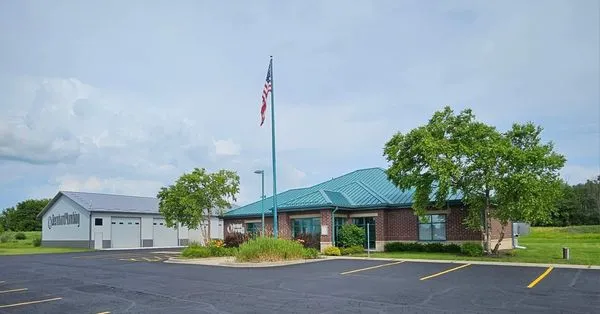
Bernhard Plumbing
Bernhard Plumbing, Inc. has been the trusted plumbing service in Mayville, WI since 1954, proudly serving Mayville, Fond du Lac, and surrounding communities. As a fourth-generation family business, we...
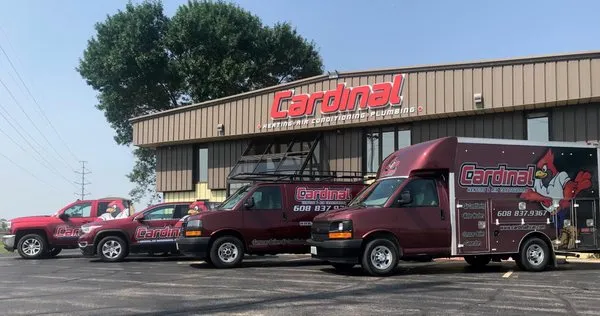
Cardinal Heating, Cooling, Plumbing & Electric
Cardinal Heating, Cooling, Plumbing & Electric is a trusted, family-owned business that has served Sun Prairie and Southern Wisconsin since 1984. Founded and operated by Rick and Sharon Ouimette, the ...

Mark Subola's journey into plumbing started early, learning the trade by cleaning drains alongside his father. After enrolling at Madison College, he formalized his skills by completing the Plumbing A...
Monona Plumbing & Fire Protection
As President and an owner of Monona Plumbing & Fire Protection, I've had the privilege of leading our Madison-based team since 2006. My journey began with an Accounting degree from UW-Madison in 1995,...
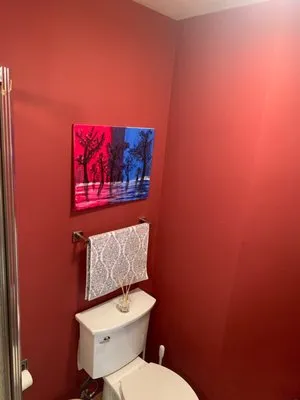
Craig's Painting and Home Improvements is a trusted, locally-owned contractor serving Madison homeowners for years. While known for expert interior and exterior painting, drywall, and staining, Craig'...

The Honest Handyman is a locally owned and operated handyman service serving Madison, Wisconsin, and the surrounding communities. Founded by a Madison family, we specialize in tackling the home repair...
Estimated Plumbing Costs in Friendship, WI
Q&A
How long does it take for a plumber to get to Friendship, Wisconsin?
Our typical dispatch route starts at Friendship Mound. From there, we take State Highway 13 directly into the village and surrounding areas. While travel time can vary, you can expect a 45 to 60 minute response window for most service calls in Friendship. We plan routes to minimize your wait, and we provide clear arrival windows so you're not left guessing.
My Friendship home was built around 1964. Are the pipes getting too old?
Galvanized steel pipes installed in 1964 are now 62 years old, which is well beyond their functional lifespan. In homes around Friendship Village Center, we're seeing a predictable failure pattern: severe internal corrosion drastically reduces water pressure, and the pipe walls become thin and brittle. This corrosion often leads to a sudden, catastrophic failure where a section of pipe simply disintegrates, causing significant water damage. Replacing this aging infrastructure before it fails is a prudent investment for any homeowner.
Do I need a permit to replace my water heater or repipe my house in Adams County?
Yes, most significant plumbing work in Friendship requires permits from the Adams County Zoning and Land Conservation Department, and the installation must comply with Wisconsin Department of Safety and Professional Services codes. As a master plumber licensed by the state, I handle all permit applications, scheduling inspections, and ensuring the work passes code. My job is to manage that red tape so your project proceeds smoothly and your system is legally compliant.
Does having a private well and septic system change the kind of plumbing service I need?
Absolutely. Rural plumbing here involves maintaining the entire water cycle on your property, from the well pump and pressure tank to the septic tank and drain field. We consider how water usage affects the septic system's capacity and ensure any new fixtures or appliances are compatible. Service goes beyond the house walls to include well equipment inspections and septic line diagnostics, which are integral to a fully functional home system.
Why do my galvanized pipes keep springing pinhole leaks?
Galvanized steel pipes from the 1960s era suffer from internal scale buildup and corrosion. Over six decades, the protective zinc coating wears away, exposing the raw steel to oxygen and minerals in the water. This reaction creates rust and mineral deposits that narrow the pipe interior, increasing pressure on weak spots. The result is pinhole leaks, most commonly found at threaded joints or where the pipe wall has been thinned by decades of corrosion.
Does hard well water ruin water heaters and fixtures?
Hard water from private wells in Friendship accelerates wear on plumbing. Minerals like calcium and magnesium precipitate out as scale, which coats heating elements in water heaters, forcing them to work harder and fail sooner. This same scale builds up inside faucet cartridges and shower valves, leading to stiff handles and reduced flow. Installing and maintaining a quality water softener is not just for comfort; it's a protective measure for your major appliances and fixtures.
Could the flat land around here cause drainage problems for my main sewer line?
The relatively plain terrain around Friendship Mound can complicate drainage. Without significant natural slope, waste from your home relies on proper pipe grading to flow toward the septic tank or municipal main. Over time, soil settling or root intrusion can create a low spot or 'belly' in the main line where water and solids collect, leading to chronic slow drains and complete blockages. A video camera inspection can identify these flatland-specific issues.
What's the most important winter plumbing tip for the Friendship snow belt?
The single most critical action is to disconnect and drain your outdoor garden hoses before temperatures drop. A forgotten hose traps water in the spigot and the adjacent pipe inside the wall. When our lows hit 8°F, that trapped water freezes, expands, and splits the pipe. You often won't discover the leak until the spring thaw, when it causes major water damage. Making this a fall routine prevents a common and costly emergency.
