Top Emergency Plumbers in Center, WI, 54106 | Compare & Call

There are 121 plumbing companies server in Center WI

Remedy Plumbing & Heating
Remedy Plumbing & Heating is a full-scale plumbing and heating contractor proudly serving Malone and the broader central and southeast Wisconsin region. Based in the 54935 area, we provide comprehensi...
Jim's Plumbing
Jim's Plumbing has been a trusted fixture in the Fox Valley since 1967. Founded by Jim Ujazdowski, a plumber trained in Three Lakes, WI, the business began as a one-man operation serving Appleton and ...
Badger Drains LLC is a second-generation, family-owned drain cleaning service proudly serving Green Bay, Ashwaubenon, Marinette, and surrounding communities. Founded on a legacy of plumbing expertise,...
RJ Parins Plumbing & Heating
Since 1967, RJ Parins Plumbing & Heating has been a trusted, family-owned plumbing and heating contractor serving Green Bay, WI, and the surrounding area. We specialize in a comprehensive range of ser...
Founded in 1926 by John Beno, Beno Plumbing has been a trusted fixture in northeastern Wisconsin for nearly a century. Now operated by third and fourth-generation family members—Jim, Daniel, and Grego...

Hockers Home Services
Hockers Home Services is a family-owned plumbing and HVAC company that has been a trusted fixture in De Pere, Green Bay, and the Fox Cities for over 40 years. Founded by Jesse Hockers, whose journey b...
K Kelly Inc Heating Cooling & Plumbing
K Kelly Inc Heating Cooling & Plumbing has been a trusted provider in Green Bay and Northeast Wisconsin for over 30 years, offering comprehensive heating, cooling, plumbing, indoor air quality, and ra...

Besch Plumbing is a trusted, locally-owned plumbing service that has been leading the Fox Valley in quality plumbing since 1975. Based in Appleton, Wisconsin, we provide a full range of residential an...
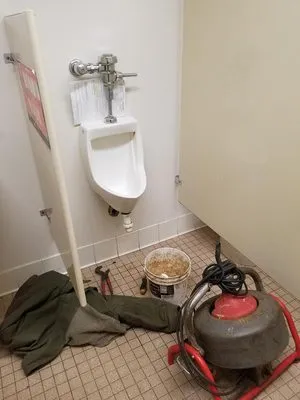
ACE Drain & Sewer has been a trusted local resource for Green Bay residents and businesses since 2007, offering reliable solutions for drain and sewer systems. We specialize in everything from clearin...

Rapid Rooter Sewer and Drain is a family-owned, owner-operated plumbing service based in Green Bay, Wisconsin. Founded on over 18 years of hands-on industry experience, the company is led by Mike, a s...
Estimated Plumbing Costs in Center, WI
Frequently Asked Questions
Could the flat land around here be causing my drainage or sewer issues?
The plain terrain near the Outagamie County Fairgrounds offers very little natural slope for drainage. For sanitary lines, this often means sewer drains were installed at a minimal pitch. Over decades, even a slight settling of the soil or a small root intrusion can flatten that pitch enough for waste to start collecting and cause persistent clogs. For your property's surface drainage, the lack of grade means water from spring melts and heavy rains has nowhere to go, which can lead to foundation seepage and put hydrostatic pressure on your basement floor drain.
How fast can a plumber get to my house out here in Center?
For a call from the Center Town Center area, a typical dispatch route has me heading past the Outagamie County Fairgrounds on State Route 47. Barring heavy snow or fair traffic, that's a reliable 45 to 60 minute drive. I keep a stocked truck for common galvanized and well system issues, so the clock on diagnosing your problem starts when I pull into your driveway, not after a trip back to a shop for parts.
Do I need a permit to replace my water heater or repipe my house in Center?
Yes, most substantial plumbing work requires a permit from the Town of Center Building Inspection office, and it must be performed by a plumber licensed by the Wisconsin Department of Safety and Professional Services. My credential is DSPSC-2021-123456. I handle pulling the permit, scheduling the required inspections, and ensuring the work meets all state and local codes. This process protects your home's value and safety, and it's my job to manage that red tape so you don't have to.
What's happening inside my old galvanized pipes that causes low water pressure?
Galvanized steel pipe corrodes from the inside out. After nearly 70 years, the interior diameter can be almost completely occluded by rust scale and mineral deposits—a process called tuberculation. This isn't a simple clog; it's the pipe itself degrading. You'll notice severely reduced flow at fixtures farthest from the main, and eventually, chunks of rust scale will break loose and jam faucet aerators and valve seats, causing erratic pressure and leaks.
Are there special plumbing concerns for a rural home in Center versus one in town?
The main difference is the complete independence of your water and waste systems. A failed pressure switch on your well pump means no water at all, not just low pressure. A blockage or failure in your septic tank or drain field can cause immediate backups, as there's no municipal sewer to take the overload. Maintenance focuses on the well equipment itself—the pump, pressure tank, and softener—and ensuring your septic system is pumped and inspected on a regular schedule to avoid catastrophic failure.
Does having a private well with hard water damage my plumbing?
Yes, it creates a two-part problem. Water from private wells here is typically very hard, meaning it's high in dissolved calcium and magnesium. This mineral content accelerates scale buildup inside pipes and, critically, coats the heating elements and tank interiors of water heaters, drastically reducing their efficiency and lifespan. Without a properly sized and maintained water softener, you're looking at frequent element failures and a water heater that may last only half as long as it should.
What's the most important thing to do with my plumbing before spring in Center?
The critical move is to disconnect and drain your outdoor hose bibs *before* the first hard freeze, and leave them disconnected. During our spring thaw, when temperatures can swing from 8 degrees at night to above freezing during the day, trapped water in connected hoses expands and contracts. This repeatedly stresses the pipe and valve seat inside your wall, which is the most common cause of burst outdoor faucets and subsequent water damage in our snow belt climate.
Why are so many houses in Center Town Center having pipe problems now?
The galvanized steel plumbing in these homes, installed around 1957, is now 69 years old. That's well beyond its functional lifespan. What you're seeing now is the predictable failure stage: internal rust and mineral buildup has drastically reduced water flow, and the pipe walls are thinning to the point of pinhole leaks, often first appearing in basements or behind walls. It's a systemic issue for the neighborhood, not an isolated problem with your house.
