Top Emergency Plumbers in Adams, WI, 53910 | Compare & Call

There are 211 plumbing companies server in Adams WI

Remedy Plumbing & Heating
Remedy Plumbing & Heating is a full-scale plumbing and heating contractor proudly serving Malone and the broader central and southeast Wisconsin region. Based in the 54935 area, we provide comprehensi...
Jim's Plumbing
Jim's Plumbing has been a trusted fixture in the Fox Valley since 1967. Founded by Jim Ujazdowski, a plumber trained in Three Lakes, WI, the business began as a one-man operation serving Appleton and ...
Wilkes Plumbing
Since 1998, Wilkes Plumbing has been the trusted plumbing and HVAC expert for West Bend, WI, and the surrounding Washington and Dodge counties. As a locally owned and operated business, we understand ...
Action Heating & Cooling
For over 36 years, Action Heating & Cooling has been the trusted local contractor for Brown Deer residents and businesses, providing reliable solutions for both HVAC and plumbing needs. As a certified...
Robert's Plumbing & Heating
Robert's Plumbing & Heating is a family-owned and operated plumbing and heating subcontractor serving Madison, WI, and surrounding areas since 2003. Founded by Brad Brickham and his father Robert, the...

Kettle Moraine Heating & Air Conditioning
For over 35 years, Kettle Moraine Heating & Air Conditioning has been the trusted, family-owned choice for Delafield and Southeastern Wisconsin. As a third-generation local business established in 198...
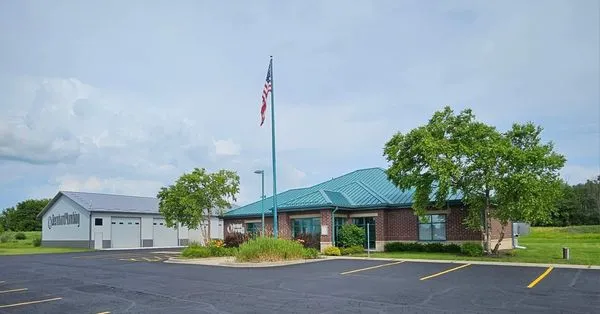
Bernhard Plumbing
Bernhard Plumbing, Inc. has been the trusted plumbing service in Mayville, WI since 1954, proudly serving Mayville, Fond du Lac, and surrounding communities. As a fourth-generation family business, we...
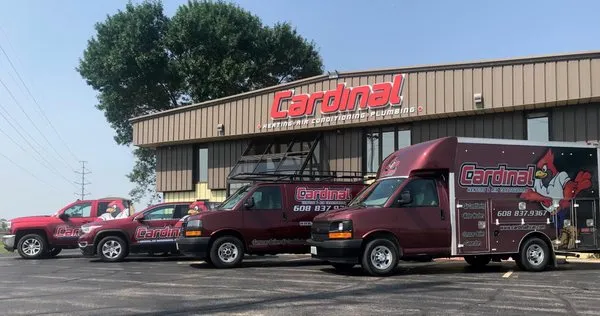
Cardinal Heating, Cooling, Plumbing & Electric
Cardinal Heating, Cooling, Plumbing & Electric is a trusted, family-owned business that has served Sun Prairie and Southern Wisconsin since 1984. Founded and operated by Rick and Sharon Ouimette, the ...

Mark Subola's journey into plumbing started early, learning the trade by cleaning drains alongside his father. After enrolling at Madison College, he formalized his skills by completing the Plumbing A...
Monona Plumbing & Fire Protection
As President and an owner of Monona Plumbing & Fire Protection, I've had the privilege of leading our Madison-based team since 2006. My journey began with an Accounting degree from UW-Madison in 1995,...
Estimated Plumbing Costs in Adams, WI
Common Questions
As a rural homeowner with a well and septic, what plumbing issues are unique to me?
Your system is self-contained, so balance is key. A failing pressure tank or well pump can cause erratic water pressure that hammers your pipes and fixtures. On the septic side, what goes down your drains directly impacts the drain field. Avoid garbage disposals, which add excessive solids, and be mindful of chemicals that can kill the necessary bacteria in the tank. The health of your well and septic systems are directly linked to your home's plumbing performance, requiring a holistic view of maintenance and repairs.
I need to replace my main water line. What permits do I need from Adams County?
Adams County Zoning and Land Use requires a permit for excavating and replacing the water service line from the well to the house. As a master plumber licensed by the Wisconsin Department of Safety and Professional Services, I pull those permits and schedule the required inspections. This ensures the work meets all state plumbing code and local zoning requirements for depth and materials. My crew handles the red tape and coordinates with the county so you don't have to navigate the process yourself.
What's one thing I should do every spring to avoid a plumbing disaster?
Before the spring thaw hits its peak, disconnect your garden hoses and drain your outdoor faucets. Water left in those lines can freeze and expand during a late cold snap, even with our average low of 7°F, cracking the faucet body or the pipe inside your wall. This is a simple, five-minute task that prevents a costly leak. Also, check the ground around your main water line entry point for settling after the frost leaves the ground, as that movement can stress older pipes.
Could the flat land around my house near Castle Rock Lake cause drainage issues for my plumbing?
The relatively plain terrain means water has less natural slope to run off. This can lead to saturated soil around your foundation during heavy rains or rapid snowmelt. That constant dampness puts external pressure on your underground main sewer line and can accelerate corrosion in older pipes. It also increases the risk of surface water finding its way into a compromised sewer lateral. Ensuring your yard grading directs water away from the house is a critical, non-plumbing fix that protects your entire system.
Does having a private well with hard water ruin my appliances?
Private wells in Adams County typically pull from groundwater with high mineral content. That hard water causes limescale to accumulate inside appliances. Your water heater's heating elements become coated, forcing it to work harder and fail prematurely. Fixtures like showerheads and faucet aerators clog with mineral deposits, reducing flow and pressure. Installing a whole-house water softener is the standard defense. It protects your plumbing infrastructure and extends the life of your water heater, dishwasher, and washing machine significantly.
How long does it take for a plumber to get to Adams from Castle Rock Lake?
Heading past Castle Rock Lake on State Highway 13 is the primary route into Adams. That drive takes 45 to 60 minutes from dispatch to arrival at your door, depending on exact location and road conditions. We factor that travel time into our scheduling to give you a realistic window. For true emergencies, we communicate that timeline clearly so you can take immediate steps like shutting off your main water valve to mitigate damage while we're en route.
My house in Adams Downtown was built in the early 70s. Should I be worried about my plumbing?
Houses built around 1973 have copper plumbing that is now 53 years old. This is a critical lifespan for that material. In Adams Downtown, we commonly see copper pipes developing pinhole leaks from the inside out, especially at solder joints and elbows where water turbulence wears the metal thin. It often starts as a small damp spot on a ceiling or a faint green stain on a pipe. Proactive inspection of exposed pipes in basements and crawlspaces can catch these failures before they cause major water damage.
Why are my copper pipes suddenly springing leaks?
Copper pipes from 1973 are failing due to a combination of age and our local water chemistry. Over five decades, hard water causes scale buildup that can create a corrosive environment inside the pipe, leading to pinhole leaks. Joints and fittings are particularly vulnerable as the solder degrades and the copper work-hardens, becoming brittle. This isn't a flaw in the original installation; it's the expected service life of the material under our specific conditions. Re-piping sections or the entire home is often the most reliable long-term solution.
