Top Emergency Plumbers in Thetford, VT, 05043 | Compare & Call

There are 25 plumbing companies server in Thetford VT
Frosty Sewer and Drain Service Repair is a trusted, locally-owned plumbing company serving South Burlington, VT. We provide comprehensive solutions for everything from routine drain cleaning to comple...

Pipe Dreams Sewer & Drain is a trusted, licensed provider serving Milton, VT, and the surrounding Chittenden County region. We specialize in comprehensive sewer, septic, and drain solutions for both h...
Horizon Plumbing & Heating is your trusted local solution for plumbing and HVAC needs in Williamstown, Vermont. We specialize in diagnosing and fixing common local problems like persistent pipe joint ...
Merrill Mechanical is a family-owned mechanical company serving Bethel, VT, and surrounding areas since 2006. Founded by Justin Merrill, who brings decades of plumbing experience from Boston and Orego...
Dundon Plumbing Heating & Portable Restrooms
Dundon Plumbing Heating & Portable Restrooms has been a trusted family-owned business serving Orwell and Vermont's Champlain Valley for over 90 years. With three generations of experience, we provide ...
Hartigan in Montpelier, VT is a family-owned wastewater management company that has been serving the community since 1957. Specializing in septic services, plumbing inspections, and portable toilet re...

Priority Building & Property Maintenance
Priority Building & Property Maintenance is your trusted, family-owned partner for property care in Springfield, VT. We focus on a preventative approach to maintenance, helping you identify and addres...

ARC Mechanical Contractors
ARC Mechanical Contractors has been a trusted name in mechanical services since 1947, when Chet Allen first opened the doors as Allen Refrigeration Company. Renamed in 1987, the company has built a 70...
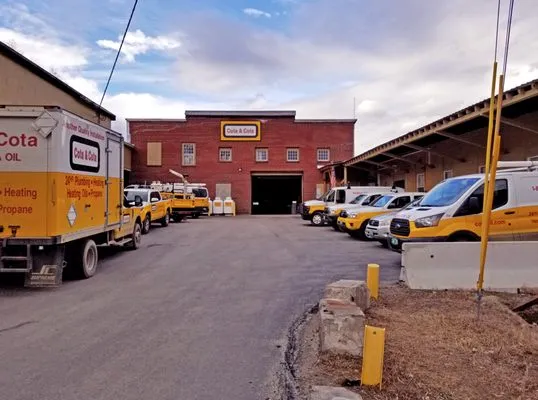
For over 75 years, Cota & Cota has been the trusted family name for plumbing and heating in Bellows Falls and beyond. Founded in 1941 by Ken and Helen Cota, this Vermont-owned business has grown from ...
Jerm's Plumbing and Heating is a Norwich-based provider of essential home services, dedicated to serving the Upper Valley community. We focus on delivering reliable plumbing, heating, and HVAC solutio...
Estimated Plumbing Costs in Thetford, VT
Frequently Asked Questions
How long does it take for a plumber to get to Thetford?
My standard dispatch route has me heading past Thetford Academy to access I-91. From there, it's a direct shot to most parts of town. Barring heavy weather or summer traffic, I can typically be on-site within 45 to 60 minutes of your call. For emergencies like a burst pipe, I prioritize these routes to minimize water damage to your home.
Could the hilly land around Thetford Academy affect my home's drainage?
The hilly terrain absolutely impacts drainage. If your home is downhill from a slope, surface runoff and groundwater can put constant hydrostatic pressure on your foundation and basement drains. For homes built into a hillside, the main water supply line from the well can be under unusual stress where it enters the house due to soil settling. Proper grading and functioning perimeter drains are critical to keep water away from your foundation and plumbing penetrations.
Does having a private well in Thetford mean I'll have more plumbing problems?
Private wells mean your water isn't treated by a municipal plant, so its hardness and mineral content vary. The hard water common here leads to significant scale buildup inside pipes, water heaters, and faucet aerators. Over time, this scale restricts flow, reduces appliance efficiency, and can cause overheating in water heater tanks. Installing and maintaining a whole-house water softener or conditioner is the most effective defense for your plumbing hardware.
My Thetford Center home's copper pipes are from the 1970s. Should I be worried?
Your home's copper plumbing is now 55 years old. At this age, the natural wear from decades of water flow and Vermont's acidic soil conditions often leads to pinhole leaks, especially at soldered joints. Homeowners here are frequently seeing small, persistent leaks in basements or behind walls, a sign the pipe wall is thinning. This isn't a system-wide failure yet, but it indicates the need for a proactive inspection to identify weak sections before a major leak occurs.
What permits do I need for a water heater replacement in Thetford, VT?
A water heater replacement typically requires a plumbing permit from the Thetford Town Clerk Office and an inspection. As a master plumber licensed with the Vermont Department of Public Safety Division of Fire Safety, I handle pulling that permit and scheduling the inspection. This ensures the installation meets state code for pressure relief valves and seismic strapping, which is part of the red tape I manage so you don't have to.
What's the most important thing to do for my plumbing before a Vermont winter?
Before temperatures hit that 8°F low, disconnect and drain all outdoor hoses. Insulate pipes in unheated spaces like crawlspaces, as our temperate climate means many homes here aren't built with deep frost walls. The bigger annual threat is the spring thaw, when frozen ground shifts and can stress main line connections. Checking for leaks at your pressure tank and wellhead after the ground thaws can prevent a soggy yard and wasted water.
Are plumbing issues different in a rural town like Thetford compared to a city?
Yes, the rural setting defines the system. You're responsible for the entire water system from the well pump to the pressure tank and the entire waste system from the house to the septic field. There's no municipal water main to blame for pressure changes or a sewer department to call for a backup. Issues like a failing pressure switch, a clogged septic filter, or a compromised well cap are unique to homes on private water and waste.
Why are my 1970s copper pipes suddenly springing leaks?
Copper pipes installed around 1971 are prone to pinhole leaks caused by a process called Type 1 pitting corrosion. This is often accelerated by our local water chemistry and soil. The leaks typically start at the bottom of horizontal runs where sediment and moisture collect. It's a specific failure mode for this vintage of pipe, and spot-repair with new copper sections and dielectric unions is a common, lasting fix.
