Top Emergency Plumbers in Claude, TX, 79019 | Compare & Call

There are 19 plumbing companies server in Claude TX

West Texas Premier Plumbing is a fully licensed and insured, locally-owned plumbing company serving Amarillo and the surrounding communities. We are not a handyman service; we are dedicated, professio...
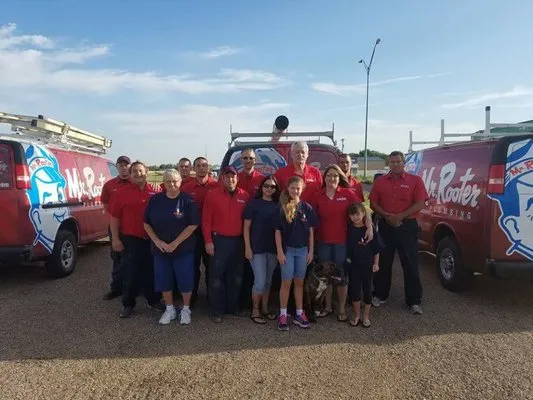
Mr. Rooter Plumbing of Amarillo is a trusted local plumbing service in Amarillo, TX, co-owned by Brandy and her father Deward. With over 30 years of experience serving Amarillo and the surrounding com...

Zeus's Handyman Service is Amarillo's trusted solution for a wide range of home repair, installation, and assembly needs. From appliance and light fixture installation to drywall, tile, and door work,...
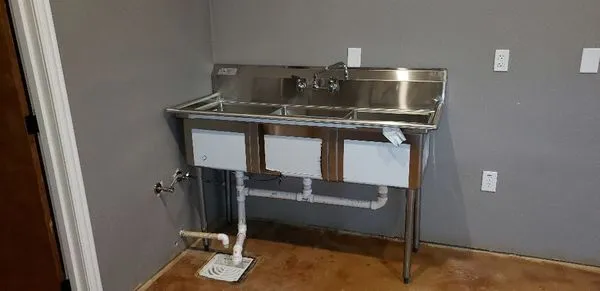
For over 30 years, DR Potts Plumbing has been Amarillo's trusted local plumbing contractor. Owner David Potts grew up in the trade, and after serving in the military, he returned to earn his master li...
1-800-Plumber +Air and Electric
For over 25 years, the Shreiner family has been the trusted name for plumbing, heating, air conditioning, and electrical services in Amarillo and the Texas Panhandle. Founded in 1995 and led by second...
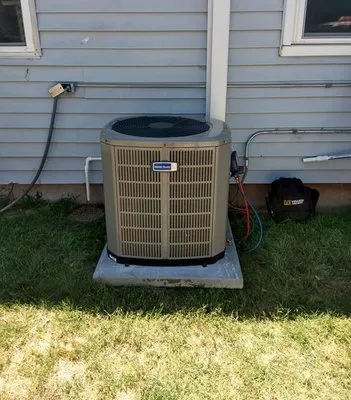
Frank's Repair Plumbing
Frank's Repair Plumbing has been Amarillo's trusted plumbing and HVAC partner since 1953. As a family-owned business with over 70 years of experience serving the Texas Panhandle, we've built our reput...

One Call Away Solutions
One Call Away Solutions is a local plumbing and handyman service based in Amarillo, Texas. Founded in 2017 and relocated to Amarillo in late 2024, we bring years of experience to help our neighbors wi...
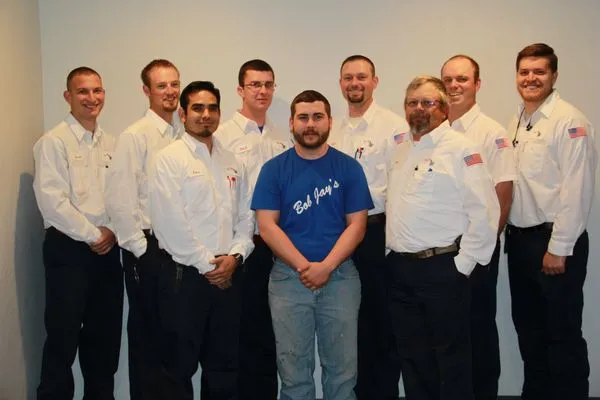
Bob Jay's
Bob Jay's Heating, Air Conditioning, and Plumbing has been a trusted name in Amarillo since 1964, bringing over 50 years of reliable service to local homes and businesses. As a licensed and bonded pro...
DDX Plumbing is Amarillo's trusted local plumber, serving homeowners and businesses across the Texas Panhandle. We specialize in the comprehensive plumbing services that Amarillo properties need, from...

J M Construction Services is a family-owned construction company with over three decades of experience serving homeowners, originally founded in California and now proudly serving Amarillo, Texas. Spe...
Estimated Plumbing Costs in Claude, TX
Frequently Asked Questions
As a rural homeowner, what plumbing systems need regular attention?
Focus maintenance on your private well and septic system, as there's no municipal backup. The well pump, pressure tank, and control switch require periodic checks for proper operation and pressure. For the septic system, have the tank pumped every 3-5 years based on household size, and avoid putting grease or non-biodegradables down the drain. These systems are entirely your responsibility, and neglect leads to costly, disruptive repairs when they fail.
Does our well water from the Ogallala Aquifer damage appliances?
Water drawn from the Ogallala Aquifer is very hard, meaning it's high in dissolved calcium and magnesium. This mineral content forms scale buildup inside pipes, water heaters, and fixture valves. In a water heater, scale acts as an insulator on the heating elements, forcing them to work harder and fail prematurely. You'll also see reduced flow and premature washer failure in faucets due to the abrasive nature of the scale particles.
What is causing these small, persistent leaks in my walls?
Galvanized steel from the early 1960s is prone to pinhole leaks caused by internal corrosion and scale buildup. As the pipe wall thins, water pressure finds the weakest spot and creates a tiny leak. In our area, the hard water accelerates this by depositing mineral scale that further restricts flow and creates uneven pressure points. These leaks often start behind walls or under slabs, going unnoticed until you see water damage or a spike in your bill.
How quickly can a plumber get to my house in Armstrong County?
A dispatch from my shop typically heads past the Armstrong County Courthouse to access US-287, the main artery for service calls throughout the area. From there, travel to most homes in the Claude area is direct. You can expect a 45 to 60 minute response window for urgent calls, which accounts for navigating county roads and final property access. This routing is efficient and avoids unnecessary delays getting to you.
Could the flat land around here be causing my slow drains?
The plain terrain around Armstrong County provides very little natural slope for gravity-based drainage. If your home's main sewer line was installed with an insufficient grade, even a slight settlement over decades can create a flat or back-pitched section where waste and solids collect. This often manifests as chronic slow drains throughout the house, not just one fixture, because the main line itself is compromised. The dense, clay-heavy soil common here can also put stress on older pipe joints.
What permits or paperwork are needed for a repipe in Armstrong County?
Any major plumbing replacement like a whole-house repipe requires a permit filed with the Armstrong County Clerk's office. As a master plumber licensed by the Texas State Board of Plumbing Examiners, I handle pulling that permit, scheduling required inspections, and providing the final compliance documentation for your records. My license ensures the work meets state code, and I manage the red tape so you don't have to navigate county bureaucracy yourself.
Why are my old pipes suddenly giving me so many problems in Claude?
Pipes from the 1962 build era are now 64 years old, well past their expected lifespan. In the Claude Original Townsite, this age means the galvanized steel's interior zinc lining has completely eroded away, exposing the raw iron to constant corrosion. Homeowners are now seeing widespread low water pressure, rust-colored water at multiple taps, and recurring leaks at threaded joints. This isn't a single fixture issue; it's the systemic failure of the entire home's original water distribution system.
What's the most important thing to do before a hard freeze in Claude?
The key is to drip faucets before the temperature hits 24°F, not after. Our arid climate means cold snaps are dry and penetrating, with little insulating snow cover. Choose one faucet on the home's furthest wall from the main line and let a pencil-thin stream of cold water run. This keeps water moving in vulnerable lines, particularly those in uninsulated crawl spaces or exterior walls, preventing pressure buildup from ice blockages that burst pipes.
