Top Emergency Plumbers in New Wilmington, PA, 16142 | Compare & Call

There are 87 plumbing companies server in New Wilmington PA
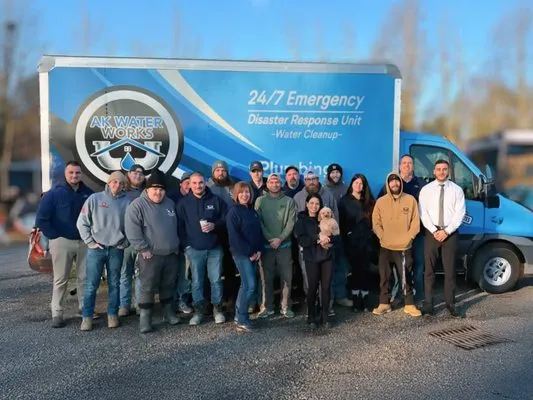
AK Water Works Plumbing & Drain
AK Water Works Plumbing & Drain is a family-owned, locally-operated plumbing company dedicated to serving Warren, OH, and the surrounding communities. We understand that plumbing problems are more tha...

1-800-Plumber +Air in Boardman, OH, is a locally and family-owned service provider dedicated to being the best for the Youngstown area. Our focus is on delivering fast, dependable plumbing and HVAC se...
Mr. Rooter Plumbing of Youngstown
Mr. Rooter Plumbing of Youngstown is a locally owned and operated plumbing service founded in 2000 by Master Plumber Robert Beall. Relocating his family to the area, Robert brings a lifetime of plumbi...
Whalen Enterprise LLC in Rogers, OH, was founded by a professional with deep roots in pipeline and excavation work, driven by a passion for tackling diverse projects. This foundation expanded naturall...

At Hydro-Flow Plumbing & Drain in Warren, OH, we understand that plumbing issues demand a swift and reliable response. With over three decades of dedicated service in North East Ohio and Western Penns...

JB's Installation Service has been a trusted name in Struthers and the greater Youngstown area for over two decades. With around 20 years of experience, we specialize in the efficient installation and...
AB Drain and Construction
AB Drain and Construction is a locally owned and operated business with deep roots in the Boardman community. Founded by a father and now continued by his son, the company is built on a legacy of trus...

Drain Fly is a local, veteran, family-owned plumbing business serving Niles, OH, and surrounding Trumbull County communities. Founded by natives of the area, we bring deep roots and a genuine commitme...

Ricket's Construction serves Thompson, OH, with a dual focus on commercial and residential property maintenance and improvement. While we specialize in commercial maintenance—including lawn care, faci...
CBI Property Maintenance
For over two decades, CBI Property Maintenance has been a trusted name in Cleveland, providing reliable general contracting, plumbing, HVAC, and electrical services. We believe in treating every clien...
Estimated Plumbing Costs in New Wilmington, PA
Common Questions
What's the most important thing to do with my plumbing before the big spring thaw hits?
Insulate any exposed pipes in unheated spaces like crawl spaces or garages before winter sets in. When overnight lows hit 18 degrees, those lines are at risk. A key pro-tip for our snow belt is to ensure your exterior hose bibs are properly winterized and that the shut-off valve inside the house is closed, with the bib left open. The rapid freeze-thaw cycles of spring are when we see the most burst pipe calls from overlooked exterior fixtures.
Our water pressure keeps dropping, and we have rust in the water. How bad is this for a house in the Westminster College District?
Your galvanized steel pipes are now 75 years old, having been installed around 1951. At this stage, the interior zinc coating has long since worn away, and significant internal rust and mineral scale has built up. Homeowners in the area are experiencing exactly what you describe: low pressure from narrowed pipe interiors and rust-colored water from flaking corrosion. This is the predictable failure mode for this generation of plumbing, and it typically signals the system is nearing the end of its serviceable life.
We need to replace our entire sewer line. What permits are required with the borough?
Any sewer line replacement requires a permit from the New Wilmington Borough Municipal Office. The installation must also comply with the Pennsylvania Uniform Construction Code, enforced by the Department of Labor and Industry. As a licensed master plumber, I pull these permits, schedule the required inspections, and ensure the work meets all code for material, depth, and proper connection. Handling this red tape is part of the job so you don't have to navigate the regulatory process yourself.
How quickly can a plumber get to my home near Westminster College in an emergency?
Heading past Westminster College on PA-18 is the primary route. From our shop, that puts us at your door typically within 45 to 60 minutes for an urgent call. We factor in local traffic and conditions, but that corridor is generally reliable. You can expect a call from the truck when we're about 15 minutes out so you can prepare.
We're on a well and septic system outside town. Are there special plumbing considerations?
Rural systems require specific maintenance. For your well, the hard water necessitates a properly sized and serviced water softener to protect appliances and piping. Your septic system's health is directly tied to what goes down the drains; avoid garbage disposals and chemical drain cleaners that disrupt the bacterial balance. We recommend a septic inspection and pump-out every 3-5 years, as neglect here can lead to drain field failure, which is a far more costly repair than routine maintenance.
I have a small, persistent leak in my basement ceiling. What could it be from an old pipe?
Galvanized steel from the 1950s often fails at the threaded joints. Over decades, the constant expansion and contraction from temperature changes, combined with corrosion, can crack the pipe threads or the fittings themselves. This creates pinhole leaks or seeping joints, especially at horizontal runs and elbows. The leak you see is usually just the exit point; the internal corrosion and joint failure is often more extensive along the pipe run.
Our basement drain backs up during heavy rains. Could the hilly land around here be a cause?
Yes, the hilly terrain around Westminster College directly impacts drainage. If your home is situated on a slope, surface water and groundwater can channel toward your foundation, increasing hydrostatic pressure. This can overwhelm perimeter drains or find its way into cracks in the main sewer line. The constant ground shift and settling on hills also puts stress on the main sewer lateral, potentially causing misaligned joints that allow root intrusion and soil infiltration, compounding the backup issue.
Why does our hot water run out so fast, and why is there a knocking sound from the water heater?
Water from Neshannock Creek is hard, meaning it has a high mineral content. As it's heated in your tank, those minerals solidify into scale, coating the heating elements and lining the tank bottom. This insulating layer makes the heater work harder and less efficiently, reducing hot water supply. The knocking sound is often scale buildup breaking loose and rumbling in the tank, which also stresses the internal components.
