Top Emergency Plumbers in Hazle, PA, 18201 | Compare & Call

There are 239 plumbing companies server in Hazle PA
Zoom Drain in Plymouth Meeting, PA, is built on a legacy of family, hard work, and dedication to local service. Founded nearly three decades ago by Jim Criniti and his family, the business grew from a...

Hi, I'm Jim Morrow, owner-operator of James Morrow Electrician. My passion for electrical work started in 9th grade shop class—I wasn't just satisfied to see a light turn on; I needed to understand th...

Benjamin Franklin Plumbing
Benjamin Franklin Plumbing in Bethlehem, PA, provides reliable plumbing services for local homeowners. When plumbing emergencies strike, our team is available 24/7 to address urgent issues like burst ...
Agentis Plumbing
Agentis Plumbing is a third-generation, family-owned plumbing company that has been serving the Lehigh Valley, including Bethlehem, since 1954. We are your local Peace of Mind Plumber, committed to bu...
Hello, Bethlehem. I'm Vinicius, your neighbor and the owner of Vini Handyman. As a trusted local tradesperson, I bring years of hands-on experience and a commitment to straightforward, reliable servic...

Moser Plumbing Services
Moser Plumbing Services is a family-owned and operated plumbing business based in Allentown, PA, founded in 2020 by Chad and Dominique Moser. Chad is a Licensed Master Plumber in Pennsylvania with ove...
Allentown Plumbing & Heating
Allentown Plumbing & Heating is a family-owned business that has been serving the Lehigh Valley since 1924. For over 85 years, our team has built a reputation on honesty and integrity, providing relia...
JJM Plumbing is a trusted, full-service plumbing company serving homeowners and businesses in Germansville, PA, and the surrounding Lehigh Valley. We specialize in addressing the common local plumbing...
Zoom Drain in Fogelsville is built on a deep family legacy in plumbing, started by our grandfather in 1948. Twenty years ago, we launched Zoom with our dad and brother from a spare bedroom, riding tog...
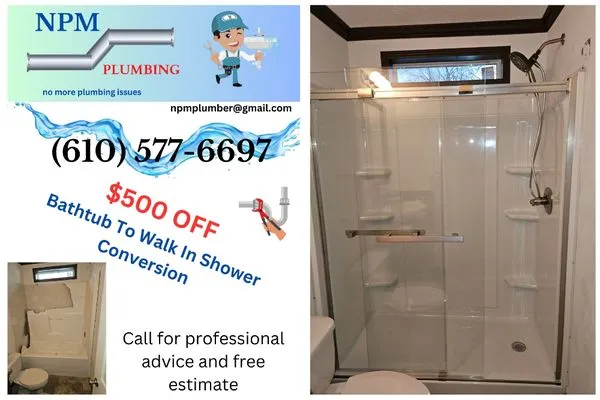
NPM Plumbing is a family-owned plumbing business serving Lehighton, PA, and surrounding Carbon County areas with over 27 years of experience. We handle everything from routine maintenance and repairs ...
Estimated Plumbing Costs in Hazle, PA
Q&A
What's the most common plumbing failure I should expect in my 1950s Hazle home?
Joint calcification and pinhole leaks are the standard failures for galvanized steel of this vintage. Decades of mineral deposits and rust create a hard, brittle scale that blocks flow and makes the pipe itself fragile. A pinhole leak often starts at a threaded joint or a weak spot in the pipe wall, and it can quickly escalate into a major rupture without much warning.
How quickly can a plumber get to my house in Hazle if I have a major leak?
Heading past Hazleton Municipal Airport on I-81 gets me into the core of Hazle in about 12 minutes. From there, local streets connect directly to neighborhoods like the Diamond District. For an urgent call, my typical dispatch route from the shop puts me on-site within that 20-30 minute window, which is critical for containing water damage before it spreads.
What's one thing I should do every winter to avoid a frozen pipe disaster?
Before temperatures hit the seasonal low of 18°F, shut off and drain your exterior hose bibs from inside the house. This Snow Belt pro-tip is non-negotiable. The spring thaw is the other peak period for leaks, as frozen pipes thaw and reveal cracks that formed during the freeze. Insulating pipes in unheated crawl spaces is another essential defense.
As a suburban homeowner, what's my responsibility versus the city's for sewer issues?
You own the sewer lateral from your house to the main line under the street. In these older suburban setups, tree roots are a constant threat to that clay or cast iron pipe, seeking moisture and causing blockages. Municipal water pressure is generally stable, but a sudden drop could indicate a breach in your service line or a major issue with the aged galvanized steel pipes inside your home.
Why do my faucets and water heater seem to fail so often here?
Water sourced from areas like the Quakake Creek watershed tends to be acidic and corrosive. This water aggressively attacks metal, dissolving the protective lining inside water heaters and eating away at brass fixture valves. You'll notice premature failure of water heater anode rods and frequent leaks around faucet stems, all accelerated by the local water chemistry.
Do I need a permit to replace my water heater, and how does that work?
Yes, the Hazleton City Building and Zoning Department requires permits for water heater replacement to ensure proper safety and code compliance. As a master plumber licensed by the Pennsylvania Department of Labor and Industry, I pull those permits, schedule the inspections, and handle all the red tape so you don't have to. My credentials guarantee the work meets both city and state standards.
Could the hilly land around Hazle be causing my drainage problems?
Absolutely. The steep slopes common around Hazleton Municipal Airport and throughout the area put constant, uneven stress on underground main sewer lines. This stress can cause joints to separate or pipes to sag, creating a belly that collects debris and leads to chronic blockages. Proper grading around your foundation is also crucial to prevent water from following the hill's slope right into your basement.
My Diamond District home's plumbing has been acting up lately. Is this just old age?
Homes built around 1952 have 74-year-old galvanized steel pipes. At this age, the zinc lining has corroded away, and the bare iron pipe is rusting from the inside out. In the Diamond District, this shows up as low water pressure at multiple faucets and persistent rust-colored water, even after flushing the lines. The pipe walls are simply too thin and compromised to function reliably.
