Top Emergency Plumbers in Gap, PA, 17527 | Compare & Call

There are 228 plumbing companies server in Gap PA
Glenolden Plumbing Services is a locally-owned plumbing business in Philadelphia, PA, founded in 2017 by master plumber Sabrina. With over a decade of experience, Sabrina has built a reputation for re...

Zoom Drain in Plymouth Meeting, PA, is built on a legacy of family, hard work, and dedication to local service. Founded nearly three decades ago by Jim Criniti and his family, the business grew from a...
Founded by tradespeople who built strong relationships within the Philadelphia construction community, Bottom Side Plumbing and Other Things is a general contracting company dedicated to helping local...
Clear Flow Drain Cleaning & Plumbing is a trusted local plumbing service based in Philadelphia, PA, dedicated to keeping homes and businesses running smoothly. We specialize in a comprehensive range o...
Penn Forge is a trusted, full-service handyman company serving Nottingham, PA, and the surrounding communities. We specialize in electrical work, plumbing, drywall repair, floor installation, and comp...
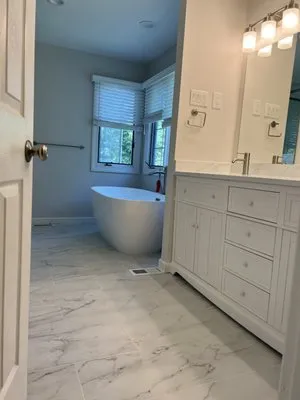
Blue Contracting is a licensed construction and remodeling company serving Plymouth Meeting, PA, and the greater Philadelphia area. We provide a comprehensive range of services tailored for both resid...
J.L. Ricciutti LLC is a family-owned and operated plumbing and HVAC business serving Newtown Square, PA, with over 25 years of combined experience. Founded in August 2023 by John Ricciutti, a graduate...
Mattioni Plumbing, Heating & Cooling
Mattioni Plumbing, Heating & Cooling has been a trusted family-owned provider in Southeastern Pennsylvania since 1948, originally operating from a barn on the Mattioni family farm along Route 113 in D...
GenServ Pro is your trusted local partner for home improvement and essential systems in Media, PA. Our licensed team provides reliable plumbing and HVAC services alongside comprehensive remodeling and...

Hi, I'm Jim Morrow, owner-operator of James Morrow Electrician. My passion for electrical work started in 9th grade shop class—I wasn't just satisfied to see a light turn on; I needed to understand th...
Estimated Plumbing Costs in Gap, PA
Q&A
My water pressure keeps dropping, but I can't find a leak. What's happening to my old pipes?
Homes in Gap Village built around 1938 have galvanized steel pipes that are now 88 years old. At this age, the interior of the pipe has corroded so severely that mineral scale and rust can completely occlude the bore. You might not see a leak because the failure is internal; the pipe's effective diameter has shrunk to a pinhole, restricting flow. This gradual blockage explains the pressure loss and often precedes a full breach at a weakened joint or fitting.
As a rural homeowner, what plumbing issues should I watch for that my city friends don't have?
Your private well and septic system add layers of complexity. Well pumps and pressure tanks have mechanical components that wear out and need servicing. Septic systems require mindful use to avoid overloading the drain field, and the inlet baffle to the tank can clog. There's no municipal water pressure to mask issues like a failing pressure tank, and no city sewer crew to clear a blockage beyond your property line.
Why do the pipes in my basement keep springing pinhole leaks?
Galvanized steel installed in 1938 has a functional lifespan of about 50 to 70 years. We're two decades past that. The zinc coating that prevented corrosion has worn away, leaving the bare steel to rust from the inside out. This creates weak spots that fail under normal water pressure, resulting in those pinhole leaks. The problem isn't isolated; it's systemic failure of the entire piping material throughout the home.
Do I need a permit to replace my water heater, and how does that work?
Yes, Salisbury Township requires permits for water heater replacements to ensure proper safety standards, like pressure relief valve discharge and seismic strapping, are met. As a master plumber licensed by the Pennsylvania Department of Labor and Industry, I pull all necessary permits, schedule the inspections with the Township Building Code Department, and handle the red tape so you don't have to. My license number is on the paperwork, which is your assurance the job is documented and compliant.
How long does it take to get a plumber out here if I have a burst pipe?
My dispatch route from the shop heads past Pequea Valley High School onto US-30, which is the main artery into Gap. Under ideal conditions, that's about a 45-minute drive. During peak traffic or inclement weather, especially with the hilly terrain, plan for a full hour. I prioritize emergencies, but the geography means we can't always beat the clock, which is why proactive maintenance on older systems is critical.
Could the hills around here be causing my main drain to back up?
Absolutely. The hilly terrain around Pequea Valley means lateral drain lines from your home to the septic tank or main sewer often have inconsistent slope. Over decades, this can lead to sections where waste flow slows, allowing solids to settle and create blockages. Furthermore, the soil movement on slopes can stress and misalign older clay or cast iron main lines, creating a low spot that becomes a recurring clog point.
What's the best thing to do in early spring to avoid a plumbing disaster?
The spring thaw is our busiest season for callouts. Once nighttime lows consistently rise above freezing, usually past 22°F, systematically inspect all exposed pipes in basements and crawl spaces for sweating or minor leaks that developed over winter. Check the pressure relief valve on your water heater and drain a few gallons from the tank to clear sediment. This proactive look-over catches small issues before the full water pressure of the thaw turns them into floods.
My water heater keeps failing and my fixtures are crusty. Is it our well water?
Yes, private wells in this area typically pull very hard water. That mineral content, primarily calcium and magnesium, precipitates out as scale. Inside a water heater, this scale insulates the heating elements, causing them to overwork and fail prematurely. On fixtures and inside pipes, it acts like arterial plaque, drastically reducing flow and accelerating corrosion in older galvanized systems.
