Top Emergency Plumbers in Neffs, OH, 43940 | Compare & Call

There are 37 plumbing companies server in Neffs OH

Drain Works is your trusted Wheeling plumbing specialist. When clogs or leaks disrupt your home, we provide same-day service to restore your peace of mind. Our team brings deep expertise and specializ...
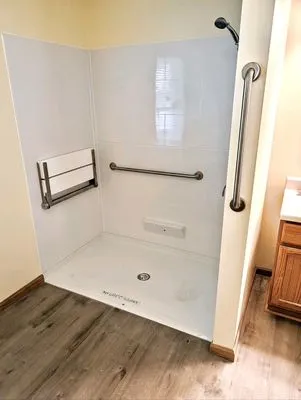
Prime Plumbing is a trusted local plumbing and remodeling contractor serving Moundsville, WV, and surrounding areas. With years of experience, we specialize in a comprehensive range of services includ...
Ruckman Plumbing and Electrical
Ruckman Plumbing and Electrical is your trusted local expert serving McMechen, WV, and surrounding areas. We specialize in solving the common plumbing issues that homeowners face, such as pipe corrosi...
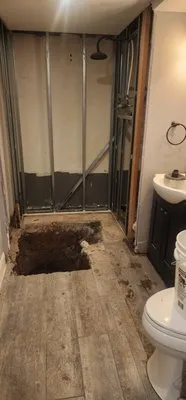
Dave's Plumbing Service
Dave's Plumbing Service has been a trusted provider of residential and commercial plumbing solutions in the Triadelphia, Wheeling, Moundsville, and St Clairsville areas for many years. We are a fully ...
Johnson Boiler Works
Johnson Boiler Works has been a cornerstone of home comfort in Benwood and the greater Wheeling area since 1902. As a family-owned and operated business, we specialize in a full range of HVAC, plumbin...
A E Pelley Plumbing & Heating is a trusted, locally-owned plumbing service in Wheeling, WV, dedicated to keeping homes and businesses running smoothly. We specialize in thorough plumbing inspections t...
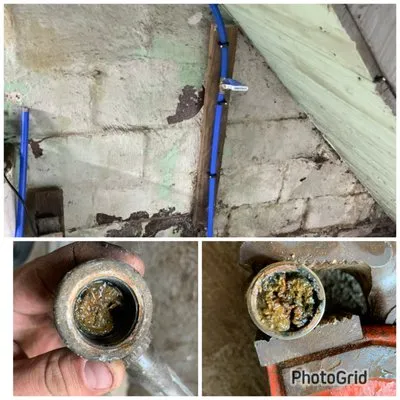
For over eight years, I've dedicated myself to the plumbing trade in the Upper Ohio Valley. What began as helping friends and neighbors with side jobs grew so consistently that by 2019, I made the dec...
Mr. Rooter Plumbing of Weirton
Mr. Rooter Plumbing of Weirton is a locally-owned plumbing service led by Master Plumber Bob Beall, who brings approximately 30 years of experience to every job. Despite facing personal challenges, in...
Serving Wheeling and the surrounding Ohio Valley since 1965, Andy Weisenborn Plumbing is a trusted, local family business dedicated to solving residential and commercial plumbing problems. We provide ...
Power City Plumbing & Heating is a trusted, locally-owned plumbing company serving Wheeling, WV, and the surrounding Ohio Valley. We specialize in diagnosing and solving the most common plumbing probl...
Estimated Plumbing Costs in Neffs, OH
Questions and Answers
Why is my water pressure so low in my Neffs Village home?
Your galvanized steel pipes are now 63 years old, installed around 1963. At this age, decades of corrosion and mineral scale from our hard water have narrowed the pipe interior significantly. You are not just seeing low pressure; you are likely experiencing a complete restriction, where rust and scale have built up to the point of nearly blocking flow. This is a predictable failure point for homes of this specific vintage here.
Does the Ohio River water cause problems for my water heater?
Yes, the mineral content in the water supply leads to hard water scaling. Inside your water heater, this scale acts as an insulator on the heating elements or burner, forcing the unit to work harder and fail prematurely. You will also see scale buildup aerators and showerheads much faster than in areas with softer water. Anode rod depletion accelerates in these conditions.
Do I need a permit to replace my water heater in Belmont County?
Yes, Belmont County Building Department requires permits for water heater replacements to ensure proper venting and pressure relief. As a master plumber licensed by the Ohio Construction Industry Licensing Board, I pull the permit, schedule the inspection, and handle that red tape so you don't have to. This ensures the installation meets current code for safety and insurance purposes.
What causes those small, rusty leaks in my basement pipes?
Galvanized steel from the early 1960s is prone to pinhole leaks caused by internal corrosion. The zinc coating that protects the steel wears away over decades, leaving the base metal exposed to oxygen and water. Once that process starts, weak spots develop and fail, often at threaded joints or along the pipe body. This isn't a maintenance issue; it's the material failing due to its age.
Could the hilly land around here be causing my sewer line problems?
The slope of the land in Neffs can put constant, uneven stress on underground sewer mains and service lines. Over years, this stress can lead to bellies or sags in the line where waste collects, or cause joints to separate. Soil movement, especially during wet periods near the river, exacerbates this. It is a common factor in main line stoppages for properties built on a grade.
How quickly can a plumber get to Neffs if I have a burst pipe?
Heading past the Ohio River on State Route 149 is the standard route for service calls in the area. From there, it's a direct run into Neffs Village. A 30-45 minute response is typical, accounting for traffic and the specific location of your property off the main route. We plan our dispatch to use that corridor efficiently.
What should I do to prepare my pipes for winter in this climate?
Our winter lows around 21°F and the spring thaw are the critical periods. Insulate any pipes in unheated crawl spaces or against exterior walls. More importantly, know the location of your main water shut-off valve. A pro-tip for our temperate zone is to disconnect and drain outdoor hoses before the first hard freeze, as a backed-up garden hose can burst an interior pipe.
As a rural homeowner, what plumbing systems do I need to maintain?
Beyond the house plumbing, you are responsible for the entire system from the well pump and pressure tank to the septic field. Well components require periodic service, and septic tanks need pumping every 3-5 years to prevent solids from reaching the drain field. Municipal sewer connections are rare here, so understanding this self-contained system is key to avoiding costly emergencies.
