Top Emergency Plumbers in Lawrence, NJ, 08540 | Compare & Call

There are 238 plumbing companies server in Lawrence NJ
Plumbing Pals
Plumbing Pals is a family-owned and operated plumbing company serving Philadelphia and the surrounding communities. We specialize in drain cleaning, hydro jetting, and camera scope inspections, provid...
Rick Lucas Plumbing & Remodeling - Plumber in Bucks County
Rick Lucas Plumbing & Remodeling is a family-owned and operated plumbing service proudly serving Feasterville-Trevose and all of Bucks County. With over 35 years of hands-on experience and a master pl...
Goodman Plumbing
Goodman Plumbing has been a trusted name in Philadelphia, Bucks, and Montgomery Counties since 1956. As a second-generation, family-owned and operated business, we bring over six decades of local expe...
Pinnacle Plumbing
Pinnacle Plumbing is a family-owned and operated business serving Philadelphia with over 25 years of dedicated local experience. We understand that plumbing problems are more than just an inconvenienc...
Facelift Remodelers & Plumbing Services
Facelift Remodelers & Plumbing Services is a Philadelphia-based plumbing company dedicated to providing reliable and transparent plumbing solutions for local homeowners. With expertise in water heater...
Founded by a Bucks County native who began his plumbing career in 2001 through a co-op at Bucks County Technical High School, JKM Plumbing Services combines deep-rooted expertise with modern efficienc...
For over 12 years, Mr. Tubs Plumbing & Heating has been a trusted, family-owned business serving Cheltenham, PA, and the greater Philadelphia area. Founded and operated by a Master Plumber with a deep...
Clear Flow Drain Cleaning & Plumbing is a trusted local plumbing service based in Philadelphia, PA, dedicated to keeping homes and businesses running smoothly. We specialize in a comprehensive range o...
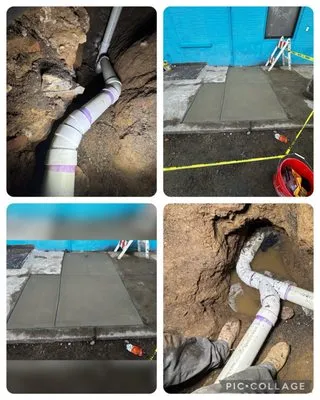
KCC Drain Services is a veteran-owned and operated plumbing business serving Philadelphia, PA, specializing in both residential and commercial plumbing and drain services. We offer a comprehensive ran...
Christian Heating & Air Conditioning
Christian Heating & Air Conditioning has been a trusted HVAC and plumbing provider in Southampton, PA, and surrounding Bucks and Montgomery Counties since 1989. Founded by Marco Giancroce, who brings ...
Estimated Plumbing Costs in Lawrence, NJ
FAQs
How fast can a plumber get to my house in Lawrence during an emergency?
Heading past The Lawrenceville School on US-1 provides a direct arterial route through most of the township. From that central corridor, residential streets are accessible within minutes. A typical dispatch from our shop to a home near the Village is a 20-30 minute drive, traffic depending.
As a suburban homeowner here, what's my biggest plumbing vulnerability?
Your main vulnerability is the buried service line connecting your house to the municipal water main. In a suburban setting like ours, that 40-plus-year-old copper line runs under your yard and driveway. Shifting soil and corrosion can cause it to fail, resulting in a loss of pressure or a leak that surfaces in the lawn. This repair requires coordination with the township water department.
Does Delaware River water cause problems for my home's plumbing?
Yes, the municipal supply drawn from the Delaware is moderately hard. This leads to scale buildup inside pipes and appliances. Your water heater's elements and tank are particularly vulnerable; efficiency drops as scale insulates the heating source. Over time, this mineral accumulation can also restrict flow at fixture aerators and valve seats, requiring more frequent service.
Do I need a permit to replace my water heater in Lawrence Township?
Yes, a plumbing permit from the Lawrence Township Construction Office is required for water heater replacement. As a Master Plumber licensed by the New Jersey State Board of Examiners, I pull that permit, schedule the required inspection, and ensure the installation meets all current code for pressure relief valves and seismic straps. Handling this red tape is a standard part of the job so you don't have to.
Could the flat land around The Lawrenceville School affect my home's main sewer line?
Plain terrain often lacks the natural slope needed for ideal drainage. If the main sewer lateral from your house to the municipal tap was not graded perfectly during installation, it can develop low spots where waste and grease accumulate. This is a common cause of recurrent slow drains or backups in older Lawrence Township homes, even without tree root intrusion.
What's the most common plumbing repair for a 1980s Lawrence home?
Joint failure at solder connections is frequent. After four decades, thermal expansion and contraction from seasonal temperature swings can fatigue the original solder. We also see pinhole leaks in copper pipes where hard water scale has created localized corrosion. Repairs often involve cutting out a section and installing a new coupling or full pipe replacement.
Why are we suddenly seeing so many plumbing leaks in our Lawrenceville Village homes?
Your copper pipes are now 43 years old. Copper installed around 1983 has a typical lifespan of 40-50 years. Homeowners in the area are seeing the cumulative effects of decades of hard water, which causes internal scaling and erosion. This often leads to pinhole leaks in horizontal runs behind walls or under slabs, a common failure point for this vintage.
What's one thing I should do each spring to avoid a plumbing disaster?
Before the spring thaw fully hits, check all exterior hose bibbs for freeze damage. A pro-tip for our temperate climate is to feel the pipe wall behind the bibb inside your basement or crawlspace. If it's colder than other pipes, you may have a slow leak from a split washer or cracked fitting that went unnoticed over the winter. Catching it early prevents water damage when you start using the bibbs again.
