Top Emergency Plumbers in Glen Ridge, NJ, 07028 | Compare & Call

There are 238 plumbing companies server in Glen Ridge NJ
Maldonado Plumbing is a licensed plumbing service based in Newark, NJ, dedicated to providing reliable and affordable solutions for residential and commercial clients. We specialize in plumbing instal...
Magic Drain, owned by Mike, is a licensed plumbing service in Union, NJ, built on a simple but powerful principle: reliable and respectful customer service. Frustrated by the hidden fees, late arrival...

UMGservice
UMGservice is a family-owned HVAC and plumbing business serving Clifton, NJ, and the surrounding Northern New Jersey area. Founded by Nazeeh Khalil, the company is built on a foundation of hard work, ...

Everything Plumbing is your trusted local plumbing expert serving Newark, NJ, and surrounding communities. We specialize in comprehensive plumbing inspections to identify and prevent costly issues bef...

C&D Electrical & Plumbing is a trusted, full-service provider for Newark homeowners. We understand the common frustrations of plumbing problems like toilet seal leaks and broken shutoff valves, which ...
Michaels Plumbing Service is a trusted local plumbing provider serving Roselle, NJ, with over 10 years of hands-on experience in both construction and plumbing. We specialize in a comprehensive range ...

Urgent Drain & Plumbing has been a trusted local resource for Elizabeth homeowners since 2014. We specialize in resolving common issues like stubborn drain clogs and pipe corrosion with efficient meth...
W And B Notary And Handyman Services
W & B Notary & Handyman Services has been serving Newark, NJ, since the early 1990s, offering reliable home maintenance and repair solutions. Founded with a focus on small repairs, electrical work, pl...
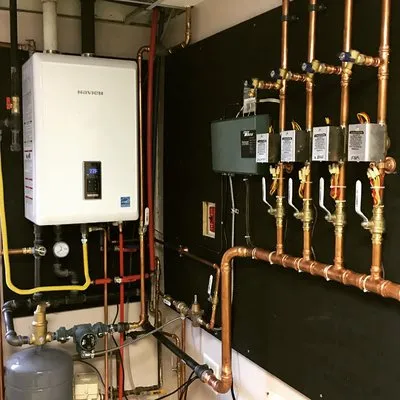
Angler Plumbing, Heating & Drain Cleaning
Angler Plumbing, Heating & Drain Cleaning is a locally-owned and operated plumbing service in Saddle Brook, NJ, founded in 2014 by a New Jersey Master Plumber with over 15 years of experience. As a fo...
Recommended Plumbing
Recommended Plumbing is a trusted, locally-owned plumbing and heating contractor proudly serving Jersey City and the surrounding New Jersey area for over three decades. As a licensed and established b...
Estimated Plumbing Costs in Glen Ridge, NJ
FAQs
My Glen Ridge Heights home was built around 1938 - should I be worried about my plumbing?
Galvanized steel pipes installed in 1938 are now 88 years old. At this age, homeowners in Glen Ridge Heights often see persistent low water pressure, rust-colored water, and frequent clogs. The steel has likely corroded internally, reducing pipe diameter and restricting flow. This gradual degradation means complete pipe failure becomes increasingly probable with each passing year.
What should Glen Ridge homeowners do before spring thaw to prevent plumbing problems?
Before temperatures rise above freezing, disconnect garden hoses and shut off exterior faucets from inside. Insulate pipes in unheated crawl spaces, particularly where 22-degree lows occur. Check for foundation cracks that could allow cold air to reach plumbing. These steps prevent burst pipes when spring thaw causes rapid temperature fluctuations.
Does Glen Ridge's water from Wanaque Reservoir damage plumbing fixtures?
Wanaque Reservoir supplies hard water with high mineral content that causes scale buildup. This accumulation reduces water heater efficiency by insulating heating elements and narrowing water lines. Fixtures develop reduced flow as aerators clog with mineral deposits. Installing water softeners or dielectric unions at connections helps mitigate these effects.
How quickly can a plumber reach my home in Glen Ridge during an emergency?
Heading past Glen Ridge Women's Club on Garden State Parkway provides efficient access throughout the borough. Our typical response time runs 20-30 minutes from dispatch. This route avoids local congestion while maintaining proximity to residential areas. We prioritize emergency calls to minimize water damage during pipe failures.
As a Glen Ridge homeowner, what should I know about our municipal water system?
Glen Ridge's suburban setting means homes connect to municipal water with consistent pressure regulation. However, older service lines between the street main and your house may still be original galvanized steel. Tree roots seeking moisture can infiltrate sewer laterals, especially near mature landscaping. Regular pressure checks help identify developing issues before they cause damage.
Why do my older Glen Ridge home's pipes keep springing small leaks?
Galvanized steel pipes from 1938 develop pinhole leaks as internal corrosion weakens the metal. Joint calcification also occurs where mineral deposits accumulate at connections, creating stress points. These failures typically manifest first in horizontal runs and at fixture connections. Complete pipe replacement often becomes necessary once multiple leaks appear.
What permits are needed for plumbing work in Glen Ridge, and who handles them?
The Glen Ridge Building Department requires permits for most plumbing modifications. As a Master Plumber licensed by the New Jersey State Board of Examiners, I submit all necessary paperwork and schedule inspections. This includes pressure tests, line replacements, and fixture installations. Handling the red tape ensures work meets current code requirements without homeowner involvement.
Could Glen Ridge's hilly terrain be causing my drainage issues?
Hilly slopes around Glen Ridge Women's Club create gravitational stress on main sewer lines. Soil shifting on inclines can misalign pipe joints, leading to root intrusion or partial collapses. Downspouts should direct water away from foundations to prevent basement flooding. Proper grading ensures drainage flows away from the property rather than pooling against it.
