Top Emergency Plumbers in Ridgely, MD, 21660 | Compare & Call

There are 47 plumbing companies server in Ridgely MD

Serras Home Repair is a family-founded, locally-owned general contracting business serving Brookhaven and Delaware County. With deep roots in carpentry, engineering, and multiple trades, we've built o...
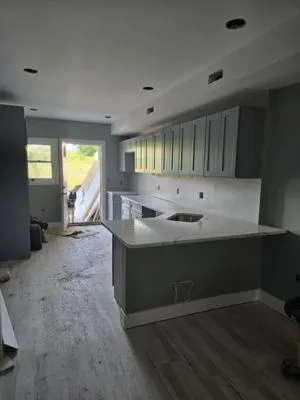
AJ Plumbing LLC has been Baltimore County's trusted plumbing and water treatment specialist for over a decade. As a fully licensed and insured local business, we provide comprehensive plumbing solutio...
Forster Plumbing is a family-owned Baltimore institution, serving the community since 1898. Spanning five generations, the company's heritage is palpable, with the founder's original tool chest displa...

Atlantic Blue Water Services
Atlantic Blue Water Services is a locally owned and operated plumbing and water treatment company serving Severna Park, MD, and the broader Baltimore and Harford County area. With over 75 years of exp...

For over two decades, Mencia and Sons Home Improvement has been the trusted, family-owned choice for Annapolis homeowners. Founded on a commitment to craftsmanship and clear communication, we speciali...

G&G Service Group
G&G Service Group is your trusted local partner for commercial and residential HVAC, plumbing, and commercial kitchen equipment in Clinton, MD. Our mission is simple: your complete satisfaction is our...
Greig Plumbing is your trusted, local plumbing expert serving Pasadena, MD, and the surrounding communities. For years, we have been helping homeowners and businesses tackle the most common and frustr...

Maintenance Engineering
Maintenance Engineering in Conowingo, MD, is a trusted local service provider with deep roots in the community. As a semi-retired maintenance director, I bring decades of hands-on experience to every ...

Ron's Plumbing LLC was founded by Ron, a Master Plumber/Gas Fitter whose career began with his father's encouragement to learn skilled trades. With decades of experience, he built his business on prov...
Palmer's Plumbing is a trusted local plumbing company serving Easton, MD, and surrounding areas since 2008. Founded by Jason and Casey Palmer, this family-owned business provides reliable residential ...
Estimated Plumbing Costs in Ridgely, MD
Common Questions
What permits do I need for a water heater replacement in Caroline County?
The Caroline County Department of Planning and Codes requires a permit for water heater replacements, which includes a pressure relief valve inspection. As a Master Plumber licensed by the Maryland State Board of Plumbing, I pull that permit, schedule the county inspection, and handle the red tape so you don't have to. My license number is on the permit, confirming the work meets current state code.
Are there special plumbing concerns for a rural town like Ridgely?
Many homes here are on private wells and septic systems, not municipal water and sewer. That means you're responsible for the entire system from the well pump to the septic drain field. Well components like the pressure tank and switch wear out, and septic fields in our soil require careful maintenance to avoid backups. It's a different scope of responsibility compared to a city-connected home.
How quickly can a plumber get to my house in Ridgely?
From my shop, a typical dispatch heads past Martin Sutton Park on Maryland Route 480, which is the main artery through town. That route usually puts me at most Ridgely addresses within 45 to 60 minutes for an urgent call. Knowing these local roads lets me plan for the quickest path, whether you're near the park or further out on a county road.
Could the flat land near Martin Sutton Park cause plumbing problems?
Ridgely's low-lying terrain, like the area around the park, has a high water table and clay-heavy soil. This puts constant hydrostatic pressure on buried sewer lines and can lead to settling or belly formation in the pipe. Over years, that stress cracks main drain lines and allows root intrusion. Proper grading around your foundation is critical here to divert surface water away from your main line connection.
What should I do to get my plumbing ready for spring?
Our temperate climate means a hard freeze at 26°F is possible into early spring. The real risk is during the rapid thaw that follows. Check any exposed pipes in crawlspaces or garages for existing minor leaks that could burst with the temperature swing. A pro-tip is to ensure your hose bibs are fully drained from winterizing and that your main water shut-off valve operates smoothly before the thaw peak hits.
How long should copper pipes last in my Ridgely home?
Copper plumbing installed around 1985 is now about 41 years old. That's entering the period where pinhole leaks from internal corrosion become common, especially in Ridgely's hard water. Homes in the Historic District often see blue-green stains at joints or a drop in water pressure, which are clear signs. This isn't a failure of the original work; it's the natural lifespan of the material under our local conditions.
Does our water from the Choptank River damage plumbing?
Water drawn from the Choptank aquifer is hard, meaning it carries dissolved minerals like calcium and magnesium. These minerals solidify as scale inside pipes and on fixtures, restricting flow over time. Your water heater's heating elements get coated, forcing it to work harder and fail sooner. This scale also narrows the diameter of supply lines, which increases pressure on older joints and accelerates leaks.
Why are my 1980s copper pipes suddenly leaking?
Copper pipes from the mid-80s often fail at solder joints or develop pinholes. Decades of hard water flowing through them cause scale buildup and internal corrosion that finally wears through. In Ridgely, we frequently find the original dielectric unions between copper and steel water heater connectors have also failed, creating a secondary leak point. This corrosion accelerates once the protective interior coating of the pipe is compromised.
