Top Emergency Plumbers in Union, KS, 67030 | Compare & Call

There are 44 plumbing companies server in Union KS
Razo’s Plumbing
Razo's Plumbing is a trusted, full-service plumbing company serving Olathe, KS homeowners and businesses. We specialize in comprehensive plumbing solutions, from routine repairs to complex installatio...
A-1 Plumbing Heating Cooling Electrical
Founded in 1985, A-1 Plumbing Heating Cooling Electrical is a trusted, locally-owned service provider for Topeka, Lawrence, and Northeast Kansas. With a commitment to "Better, Cleaner, Faster" service...
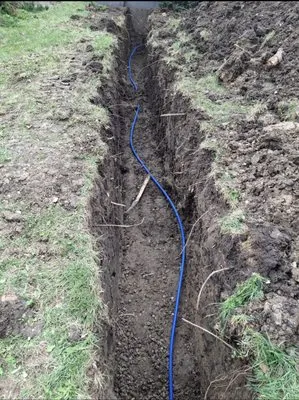
Simms Solutions is a trusted local contractor in Wellsville, KS, specializing in excavation, plumbing inspection, and trench digging services. We approach every project with a commitment to thoroughne...
Aegis Fire Protection
Aegis Fire Protection LLC has been a trusted provider of comprehensive fire safety and related plumbing services for the Kansas City Metro and Springfield, MO areas since 2007. Based in Overland Park,...
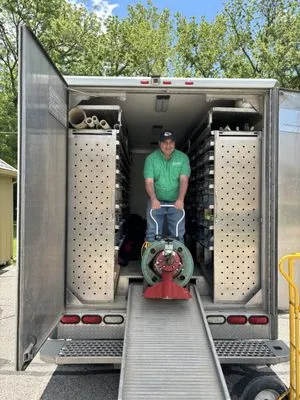
O'Harra's Plumbing Service
O'Harra's Plumbing Service has been a trusted, locally-owned plumbing company in Topeka, Kansas, since opening in 2013. Founded and operated by a Kansas Certified Master Plumber with over 27 years of ...
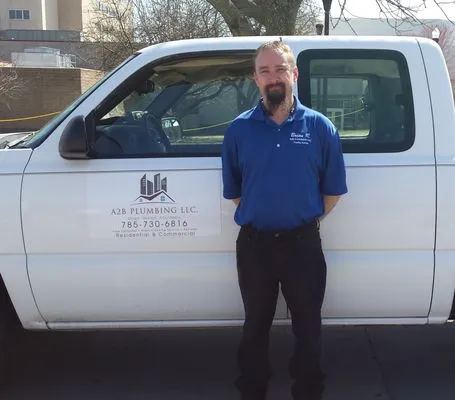
A2B Plumbing
For over 24 years, A2B Plumbing has been a trusted, locally-owned plumbing service in Topeka, KS. We believe in providing the highest quality work at honest and affordable prices. Our priority is cate...
Since 1986, Cooper's Inc. has been a trusted provider of plumbing, heating, and air conditioning services for homeowners in Topeka and the surrounding Kansas communities. Our long-standing reputation ...
Elite Plumbing has been the trusted plumbing service in Carbondale, KS, and the surrounding areas for over 13 years. As a licensed and certified team, we understand that plumbing problems can disrupt ...
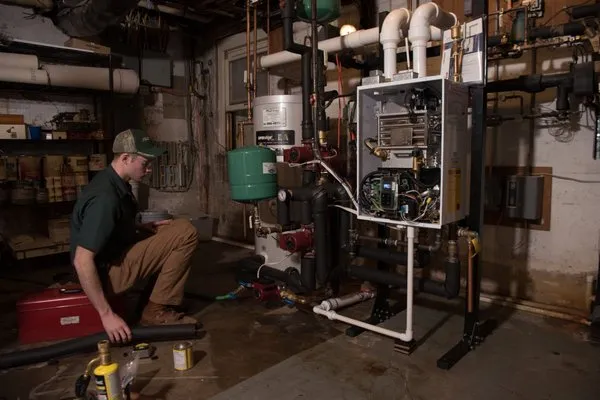
Serving Topeka and northeast Kansas since 1951, McElroy's is a trusted, family-owned mechanical contractor providing reliable plumbing, heating, and air conditioning services. Our team of state-licens...
Snake 'n' Rooter
Snake 'n' Rooter Plumbing Company has been a trusted family-owned plumbing service in Topeka, KS, and the surrounding Greater Kansas City and Lawrence areas since 1978. Built on a foundation of qualit...
Estimated Plumbing Costs in Union, KS
Frequently Asked Questions
How quickly can a plumber reach my home in Union if I have an emergency?
Heading past Union Historical District on US-75, our dispatch route covers most Union addresses within 45-60 minutes. We prioritize emergency calls and coordinate with local traffic patterns to minimize delays. This response time allows us to address urgent issues like burst pipes or major leaks before they cause extensive water damage to your property.
How does the flat terrain around Union affect my home's drainage system?
Plain terrain with minimal slope can cause poor drainage around foundations near Union Historical District. Water pools instead of flowing away, putting hydrostatic pressure on basement walls and sewer lines. This constant moisture accelerates corrosion in older pipes and can lead to foundation cracks. Proper grading and French drains help redirect water away from your home.
What should Union homeowners do before spring thaw to prevent plumbing issues?
Insulate exposed pipes in crawl spaces and attics before temperatures drop to 18°F. Disconnect garden hoses and shut off exterior faucets to prevent freezing. Check for drafts near plumbing during colder months. These steps reduce the risk of burst pipes when spring thaw causes rapid temperature changes that stress older plumbing systems.
Why are so many Union homes built around 1962 suddenly having plumbing problems?
Galvanized steel pipes installed in 1962 are now 64 years old. Homeowners in Union Township Center are seeing rust-colored water, reduced water pressure, and frequent leaks as the zinc coating has worn away. The steel underneath corrodes over decades, leading to internal rust buildup that restricts flow. This aging infrastructure requires proactive inspection before complete failures occur.
What plumbing concerns are unique to rural Union homes with wells and septic systems?
Private wells require regular testing for water quality and pump maintenance, while septic systems need periodic inspection to prevent backups. Well pressure tanks can develop bladder failures, affecting water delivery. Septic field lines may clog if non-biodegradable materials enter the system. Coordinating well and septic care prevents contamination and ensures reliable operation.
Does hard water from private wells damage plumbing fixtures in Union?
Hard water with high mineral content causes scale buildup inside water heaters, faucets, and showerheads over time. The minerals precipitate out and accumulate, reducing efficiency and flow rates. Water heaters work harder, increasing energy costs, while fixtures develop restricted flow. Installing water softeners or regular descaling maintains system performance.
Who handles permits and regulations for plumbing work in Union?
I manage all required permits and inspections with the Kansas Department of Health and Environment. My credentials with KDHE ensure work meets state codes for water safety and wastewater disposal. This includes well modifications, septic repairs, and pipe replacements. Handling this red tape saves homeowners time and ensures compliance with local regulations.
What causes those small leaks in older Union home pipes?
Galvanized steel pipes from the 1960s develop pinhole leaks due to internal corrosion and joint calcification. As the protective zinc layer deteriorates, microscopic holes form where rust has eaten through the steel. These leaks often start at threaded connections where dissimilar metals meet, creating electrolytic corrosion. Addressing them early prevents larger sections from failing.
