Top Emergency Plumbers in Seward, IL, 60431 | Compare & Call

There are 31 plumbing companies server in Seward IL

Dans Drain Cleaning Service provides essential plumbing and drain services for Beloit homes and businesses. Operating around the clock, the team tackles a full range of issues from simple clogs and sl...

LKC Home Services
LKC Home Services is a trusted, locally-owned provider serving the Clinton, WI community for over 25 years. We specialize in plumbing, heating, and cooling services, and have recently expanded our exp...
Dependable Fire Equipment is a Waukegan-based family business founded in 1974, marking over 50 years of dedicated service to the community. With a focus on life safety, they combine deep-rooted local ...
Triangle Plumbing is a licensed plumbing service based in Harvard, IL, with over 15 years of industry experience. We specialize in residential plumbing solutions, offering a wide range of services inc...

Pease Plumbing is a locally owned and operated plumbing service in Rockford, IL, founded by a plumber with over 12 years of hands-on experience in the field. After working for multiple plumbing and el...
Ideal Temp Control & Plumbing
Ideal Temp Control & Plumbing has been the trusted local choice for Rockford homeowners for years, committed to providing expert HVAC and plumbing solutions with honesty and integrity. As a fully lice...
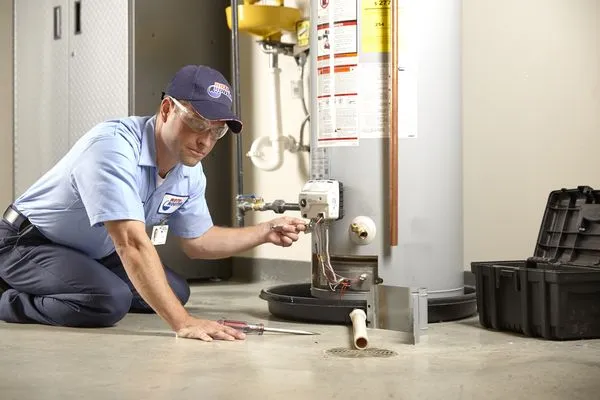
Roto-Rooter Plumbing, Drain, & Water Damage Cleanup Service
Roto-Rooter Plumbing, Drain, & Water Damage Cleanup Service in Rockford, IL is a full-service provider specializing in plumbing, drain cleaning, and water damage cleanup. We offer emergency same-day s...
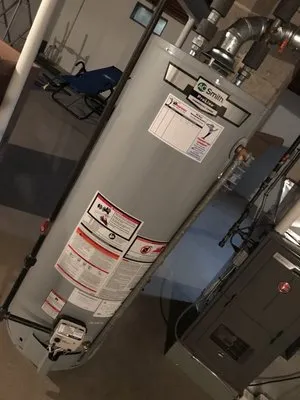
Pearson Plumbing, Cooling and Pest Control
Pearson Plumbing, Cooling and Pest Control is a trusted, family-owned contractor serving Rockford and Freeport for over 50 years. Founded on the principle of providing reliable service at fair prices,...
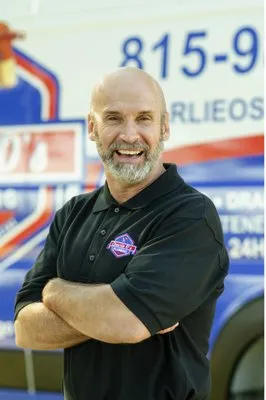
Charlie O's Plumbing is a family-owned plumbing service with over 20 years of experience serving Winnebago, IL, and surrounding areas. We specialize in both residential and commercial plumbing, offeri...
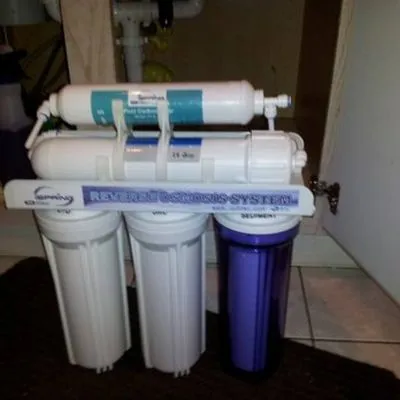
Curt The Plumber is a Freeport-based plumbing service operated by Curt, a seasoned professional with over three decades of experience in the Chicago area. Since 1991, he has handled high-volume reside...
Estimated Plumbing Costs in Seward, IL
Questions and Answers
Does having a private well in Seward mean I have different plumbing problems?
Yes, private wells introduce specific factors. The lack of municipal water treatment means your home's entire system—from the pressure tank to the water heater—handles raw, hard water directly. This leads to rapid scale buildup inside appliances and on faucet aerators. Without a proper whole-house filter and softener, you can expect a significantly shorter lifespan for water heaters and cartridge-style faucets.
Why do my copper pipes keep springing pinhole leaks?
For 1983-era copper, pinhole leaks are a common failure point. The cause is often localized corrosion, accelerated by our area's hard water and the electrical grounding systems sometimes attached to pipes. You'll find them most frequently on hot water lines and near dielectric unions where dissimilar metals meet. It's a systemic issue for homes of this vintage, not random bad luck.
Do I need a permit to replace my water heater in Winnebago County?
Yes, Winnebago County Building and Zoning requires a permit for water heater replacement, and the installation must meet Illinois Department of Public Health code. This ensures proper venting, pressure relief, and seismic strapping. As a licensed master plumber, I handle pulling that permit and scheduling the county inspection. My credential means the red tape and code compliance are managed for you, so the system is legal and safe.
Could the flat land around Seward be causing my slow drains?
The plain terrain means drainage relies entirely on proper pipe slope, as there's no natural gradient to assist. If a main sewer line settles even slightly over decades, it can lose its critical pitch. This is especially true for lines running toward the forest preserve's lower water table areas. Waste moves sluggishly, allowing solids to settle and roots to take hold, leading to recurrent clogs.
My Seward, IL home was built in the 1980s. Should I be worried about my plumbing?
Homes in Seward built around 1983, like many in the Village Center area, now have copper pipes that are 43 years old. At this age, the internal protective lining can wear thin from decades of water flow and mineral interaction. What you'll often start seeing are persistent pinhole leaks, typically in horizontal hot water lines or at solder joints. This isn't a sign of poor initial work, but the natural lifecycle of the material under our specific water conditions.
How fast can a plumber get to a house in Seward in an emergency?
From my shop, the typical dispatch route heads past the Seward Forest Preserve to access US-20, which is the main artery for the area. That puts most homes in Seward within a 45 to 60 minute response window once we're rolling. We plan routes to avoid being bottled up by train crossings or seasonal farm equipment on the back roads. Knowing the local roads is key to a reliable ETA.
What's the most important cold-weather plumbing tip for Seward winters?
The critical period here is not necessarily the deepest cold snap, but the rapid spring thaw after temperatures dip to around 14°F. That freeze-thaw cycle shifts the ground and can stress already aged pipe connections. The pro-tip is to disconnect and drain your outdoor hoses in the fall and keep a slow drip going on faucets fed by pipes in exterior walls during any sudden, hard freeze warning.
As a rural homeowner, what's the biggest plumbing system I'm responsible for?
Beyond the house itself, you're fully responsible for the septic system and the well pump/pressure tank. These are major components that municipal homeowners don't think about. A failing septic field or a well pump losing its prime are complex, costly emergencies. Regular septic pumping every 3-5 years and monitoring your pressure tank's cycle are the best preventative measures you can take.
