Top Emergency Plumbers in Martinsville, IL, 62442 | Compare & Call

There are 13 plumbing companies server in Martinsville IL
Role Model Plumbing And Handyman is your trusted local expert for plumbing and home repair in Marshall, IL. We handle everything from appliance installation to custom cabinetry, providing reliable sol...

Clark County Plumbing is Martinsville, IL's trusted, full-service plumbing company. We specialize in diagnosing and solving the common local issues that impact area homes, such as persistent low water...

Parks Property Management
Parks Property Management is a family-owned excavation contracting service based in Marshall, IL, committed to generating perfection in every project. As a local, family-run business, we focus on buil...
Plumbco is your trusted local plumbing expert serving Casey, IL, and the surrounding communities. We specialize in a comprehensive range of residential and commercial plumbing services, including bath...

L D Mechanical Contractors
L D Mechanical Contractors is a family-owned plumbing and HVAC business serving Charleston, IL, and Central Illinois since 1982. Founded by Les Dallas, the company has built a reputation for reliable ...

Nostalgic Handyman Service is a family-owned and operated business serving Paris, IL, where we take genuine pride in our daily work. We approach each project with care and enjoyment, ensuring every cu...
Quality Plus Plbg & Heating is a trusted plumbing and heating service provider based in Martinsville, IL, dedicated to helping local homeowners maintain safe and functional systems. Many Martinsville ...
Snearley & Company is a trusted plumbing service in Martinsville, IL, dedicated to keeping local homes and businesses running smoothly. We specialize in thorough plumbing inspections that identify and...
Superior Service & Repair is Oakland, IL's trusted home service provider, specializing in both electrical and plumbing solutions for local homeowners. We understand that common plumbing issues like to...
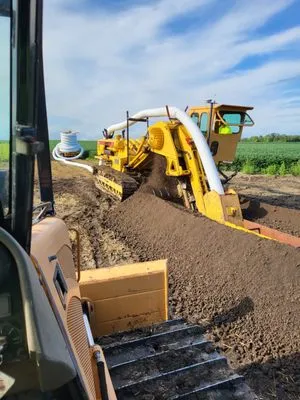
NC Drainage is a trusted local excavation and plumbing service provider in Kansas, IL, dedicated to solving common drainage and sewer issues that affect area homeowners and businesses. We specialize i...
Estimated Plumbing Costs in Martinsville, IL
Common Questions
Do I need a permit to replace my water heater or re-pipe my house?
Yes, Clark County requires permits for major plumbing work to ensure it meets state code. As a licensed Master Plumber, I handle all filings with the Clark County Building Department. My credentials with the Illinois Department of Public Health also cover well and septic work, so I manage the red tape and inspections from start to finish.
My Martinsville home's water pressure keeps dropping. What's happening with these old pipes?
Houses built around 1961, common in Downtown Martinsville, have 65-year-old galvanized steel pipes. At this age, internal scale buildup has significantly narrowed the pipe diameter, restricting flow. You're likely experiencing reduced pressure at multiple fixtures, not just one. This gradual loss is a hallmark of end-of-life galvanized systems.
As a rural homeowner, what unique plumbing systems should I maintain?
Your private well and septic system require scheduled maintenance, unlike municipal services. The well pump and pressure tank have a finite lifespan and can fail from hard water scale. The septic tank needs pumping every 3-5 years to prevent solids from clogging the drain field. Neglecting these systems leads to much more costly emergencies than a clogged drain.
Could the flat land around the Martinsville Fairgrounds cause plumbing issues?
The generally plain terrain can complicate drainage. With minimal natural slope, yard drainage systems and home footing drains must be precisely graded to move water away from the foundation. Improper grading puts constant hydrostatic pressure on basement walls and can overwhelm a home's main sewer line during heavy spring thaws, leading to backups.
How quickly can a plumber get to my house from the Martinsville area?
Heading past Martinsville Agricultural Fairgrounds onto I-70 is the main route for covering the wider service area. For most calls in Martinsville proper, expect a 45-60 minute dispatch window from the initial call. This accounts for rural road travel and ensures the right truck with the necessary parts is routed to you.
Does having a private well with hard water ruin my appliances?
Yes, the mineral content from private wells here leads to heavy scaling. Inside a water heater, scale acts as an insulator on the heating element, forcing it to work harder and fail prematurely. You'll also see reduced flow and premature seal failure in faucets and toilet fill valves. Installing and maintaining a whole-house water softener is the most effective defense for your plumbing and appliances.
Why do I keep getting pinhole leaks in my basement pipes?
Galvanized steel from the 1960s corrodes from the inside out due to our hard water. This creates weak spots that eventually fail as pinhole leaks, often at threaded joints or along horizontal runs. The corrosion is accelerated where dissimilar metals, like copper, connect without a proper dielectric union. These small leaks can cause significant water damage over time.
What's the most important thing to do to my plumbing before winter in Martinsville?
Insulate any exposed pipes in unheated crawl spaces or against exterior walls. Our average low of 19°F means those lines are at risk. A critical pro-tip is to disconnect and drain your garden hoses every fall; a frozen hose bib can split the pipe inside the wall. Also, know the location of your main water shut-off valve in case a pipe does freeze and burst.
