Top Emergency Plumbers in Kalona, IA, 52247 | Compare & Call

There are 29 plumbing companies server in Kalona IA
Colony Plumbing, Heating & Air Conditioning
Colony Plumbing, Heating & Air Conditioning has been serving Cedar Rapids and surrounding communities since 1973, starting as a small two-man shop in the Amana Colonies before settling in Cedar Rapids...
Complete Home Maintenance
Complete Home Maintenance, LLC is a second-generation family business serving Cedar Rapids, IA, with over 30 years of hands-on experience in home maintenance and construction. We provide comprehensive...
JP Plumbing & Heating
JP Plumbing & Heating has been a trusted, family-owned provider in Marion, IA, since 2009. We are Master Plumber and Master HVAC certified, holding an A+ BBB rating. We offer comprehensive plumbing, h...
Phil’s Sewer and Drain Cleaning
Phil's Sewer and Drain Cleaning provides comprehensive plumbing and drain services for Amana and the surrounding area. With a combined 10 years of experience in the trades, I handle both residential a...
Above All Plumbing Service
Above All Plumbing & Drain Service is a trusted local plumbing company serving Cedar Rapids and surrounding communities. We specialize in comprehensive plumbing solutions including hot water recircula...
Corridor Plumbing
Corridor Plumbing is a trusted, family-owned plumbing service serving the Cedar Rapids and Iowa City corridor. Built on a foundation of honesty and respect, our solid team of experienced plumbers is d...
Rabe Hardware
Rabe Hardware has been serving Eastern Iowa since 1979 as a family-owned, full-service mechanical contractor. Based in Blairstown with a second location in Vinton, we specialize in solar, geothermal, ...
A1 Sewer Service has been serving Iowa City residents and businesses for over 8 years, providing reliable plumbing and sewer solutions with a warranty on all work. We specialize in a comprehensive ran...
Elias Plumbing is your trusted local plumbing expert serving Parnell, IA, and surrounding areas. We specialize in comprehensive plumbing services including bathtub, faucet, garbage disposal, shower, s...
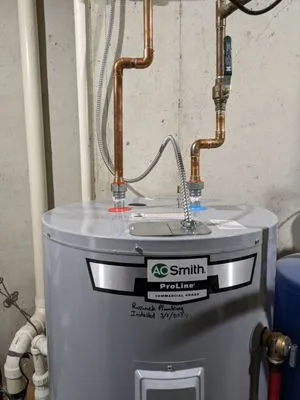
Jake Rozinek is a licensed master plumber serving West Branch, IA, with a commitment to reliable plumbing solutions for local homeowners. After serving in the military, he completed his apprenticeship...
Estimated Plumbing Costs in Kalona, IA
Common Questions
Are there special plumbing considerations for a rural home near Kalona?
Yes, rural properties typically operate on a private well and septic system, not municipal water and sewer. This means water pressure is controlled by a well pump and pressure tank, and all waste is processed on-site. Maintenance is the homeowner's responsibility. We check for issues like failing pressure switches, sediment in the well tank, and ensure the septic system's inlet baffle is clear to prevent backups—a different scope than a city call.
Could the flat land around here cause drainage problems for my home?
The plain terrain around Kalona Historical Village means there's very little natural slope for water to run off. This can lead to standing water around your foundation during heavy rains, which increases hydrostatic pressure and can stress the main sewer line exiting your home. Ensuring your downspouts extend at least 10 feet from the foundation and the ground slopes away is a critical, simple defense against sewer backups and wet basements.
My house was built in the 1970s like many in Kalona. What should I expect from my plumbing now?
Homes built around 1976 have copper pipes that are now 50 years old. In Downtown Kalona, we're seeing the natural lifecycle of that copper materialize as thinning walls and increased frequency of pinhole leaks. This isn't a defect; it's the expected wear from decades of water flow and mineral interaction. Proactive inspection of supply lines, especially behind walls and in crawlspaces, can help manage replacement before a failure causes interior damage.
Do I need a permit to replace my water heater or repipe my house?
Most major plumbing work in Washington County requires a permit from Planning and Zoning, and it must be performed by a licensed professional like myself, credentialed with the Iowa Plumbing and Mechanical Systems Board. I handle pulling the permit, scheduling the required inspections, and ensuring the work meets all current code. My job is to manage that red tape so you don't have to navigate the bureaucracy yourself.
How quickly can a plumber get to my house in Kalona for an emergency?
Heading past Kalona Historical Village on Iowa Highway 1 gives us a direct route into most neighborhoods. Our standard 45-60 minute response window accounts for rural road travel and gathering the specific parts for common local issues, like dielectric unions or water heater elements. We coordinate by phone to ensure the right truck and material are rolling your way from the first call.
Does Kalona's hard water damage my plumbing fixtures and appliances?
Water drawn from the Jordan Aquifer is very hard, meaning it carries a high mineral load. Inside your home, that mineral deposits as limescale, which coats the inner surfaces of water heaters, reduces their efficiency, and clogs faucet aerators and showerheads. We recommend installing a whole-house water softener to protect your investment; without one, expect to service or replace water heater elements and fixtures more frequently due to scale buildup.
What's the most important plumbing tip for Kalona winters?
While our low of 14°F isn't extreme, the real risk is the rapid freeze-thaw cycles during spring. A pro-tip is to disconnect and drain your garden hoses every fall and ensure the exterior hose bib is a frost-free model. The most common emergency call we get is for a burst spigot line that froze during a cold snap and then ruptured as it thawed, flooding the basement or crawlspace.
Why are my copper pipes from the 70s suddenly springing small leaks?
Copper installed in the mid-70s often suffers from pinhole leaks caused by a combination of age, water chemistry, and the soldering techniques of the era. Electrolytic corrosion between the copper and any steel fittings, or simply decades of erosion from hard water flow, can wear a pinpoint hole in the pipe wall. The fix typically involves cutting out the compromised section and, given the age, discussing the long-term benefit of repiping that entire line.
