Top Emergency Plumbers in Fort Pierce South, FL, 34947 | Compare & Call

There are 173 plumbing companies server in Fort Pierce South FL

Joe Hillman Plumbers
Joe Hillman Plumbers has been serving Davie and South Florida since 1987, when founder Joe Hillman started the family-owned business with just two vans and four associates. Today, with over 85 employe...
Showalter Construction & Restoration
Showalter Construction & Restoration is a trusted, disabled veteran-owned company serving Thonotosassa and Central Florida since 2005. Founded and led by Robert J. Showalter, a Florida-licensed contra...
K&R Plumbing
K&R Plumbing is a family-owned and operated plumbing service proudly serving St. Cloud and the surrounding communities. With a team that brings over a century of combined experience in both commercial...
Blue-Collar Plumbing & Drain Cleaning is a family-owned and operated business dedicated to serving Orlando and the greater Central Florida area. We understand that plumbing problems can disrupt your h...

Regal Plumbing is a family-owned and operated plumbing company proudly serving Port St. Lucie, Florida, and the surrounding communities. Fully licensed and insured, we are your reliable, local partner...

Dom Bella Plumbing
Dom Bella Plumbing is a family-owned, licensed plumbing company serving Port St. Lucie and the broader Treasure Coast since 2017. Founded by Master Plumber Alexander, our team brings over 23 years of ...
Trademark Plumbing is a family-owned and operated plumbing service based in Port St Lucie, FL, with over 20 years of experience in the trade. Licensed and insured, we provide reliable plumbing solutio...
All Father's Plumbing has been serving Port St. Lucie homeowners and businesses for nearly 20 years as a fully licensed and insured plumbing service provider. We specialize in comprehensive plumbing s...
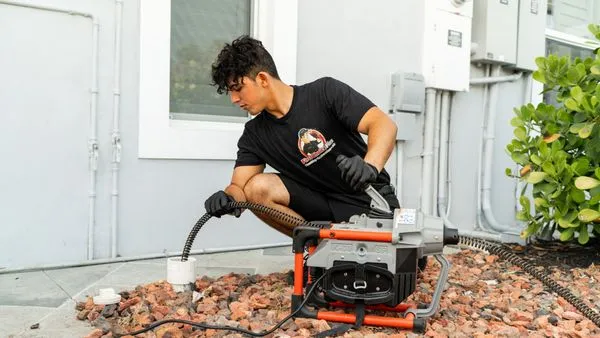
First Choice Plus Plumbing & Air
First Choice Plus Plumbing & Air is a trusted local service provider proudly serving Port St. Lucie and the surrounding communities since 2007. Owner Manuel and his team believe exceptional customer s...
Dawkins Plumbing & Backflow Services
Dawkins Plumbing & Backflow Services is a family-owned and operated plumbing business proudly serving Port St. Lucie and the Treasure Coast since 2023. With over a decade of experience, founder Dawkin...
Estimated Plumbing Costs in Fort Pierce South, FL
Common Questions
What should I do to my plumbing before hurricane season?
Before peak hurricane season, a specific pro-tip is to install a pressure-regulating valve (PRV) if your home doesn't have one. Municipal water pressure can surge during major storm events when usage fluctuates wildly, and a 54°F low won't protect pipes from a pressure spike. A properly set PRV protects your 55-year-old copper lines and appliance hoses from bursting. It's a one-time install that provides continuous protection.
Why do my copper pipes keep springing pinhole leaks?
Persistent pinhole leaks in 1970s copper are frequently caused by a combination of age and our local water chemistry. Over 55 years, the protective mineral layer inside the pipe can break down, allowing the water to corrode the copper itself in small, concentrated spots. The problem often accelerates at soldered joints, where different metals and heat from installation created a vulnerability. Re-piping the affected sections with new copper or PEX is the reliable, long-term fix.
Does hard water from our aquifer damage plumbing fixtures?
Water from the Floridan Aquifer carries dissolved minerals like calcium and magnesium. As the water heats in your tank or sits in fixtures, those minerals solidify into scale. You'll see it as a chalky white buildup on showerheads, but inside the water heater, scale coats the heating element and tank lining, reducing efficiency and lifespan. Installing a whole-house water softener is the most effective method to protect appliances and prevent flow restriction at fixtures.
How quickly can a plumber get to Fort Pierce South in an emergency?
Dispatch from our central location routes us past the St. Lucie County Regional History Center to access I-95, providing a direct path into Fort Pierce South. That route typically puts us on-site within the 25 to 35 minute window, even with midday traffic. We factor in local road patterns near Indian River Estates to ensure we're not delayed by school zones or construction.
What permits are needed for a repipe in St. Lucie County?
Any repipe replacing supply lines requires a permit from the St. Lucie County Building Department. As a Master Plumber licensed by the Florida Construction Industry Licensing Board (CILB), I handle pulling that permit, scheduling the required inspections, and ensuring the work meets all current code. This process validates the installation for your homeowner's insurance and any future property sale. My credential means I manage the red tape so you don't have to navigate county offices yourself.
Could my home's location cause main sewer line problems?
The coastal terrain here has a gentle but consistent slope toward the intracoastal. This natural drainage can put lateral stress on older main sewer lines over decades, potentially causing joints to separate or the line to sag. Soil movement, especially after heavy seasonal rains, creates voids that allow pipes to settle improperly. A video inspection can identify these specific stress points before they lead to a complete backup.
We're on city water and sewer, what are common issues?
In this suburban setting with municipal service, two frequent issues are pressure variance and lateral line intrusion. City water pressure can be higher than ideal for older copper, exacerbating weak points. On the sewer side, even though you're not on a septic system, the mature landscaping common here means tree roots are constantly seeking moisture and can infiltrate the lateral line from your house to the street main, causing slow drains or blockages.
My pipes are from the early 70s, what's going to happen?
Copper plumbing installed around 1971 is now 55 years old. In homes throughout Indian River Estates, that age typically means the interior walls of the pipes are thinning from decades of water flow and mineral interaction. Homeowners often first notice a sudden pinhole leak, usually under a slab or behind a wall, where the copper has worn to its thinnest point. This stage requires proactive inspection, as one leak often signals others are imminent.
