Top Emergency Plumbers in Hampton, CT, 06247 | Compare & Call

There are 143 plumbing companies server in Hampton CT
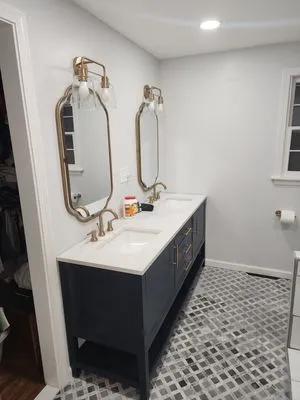
Plumbums is a licensed plumbing and heating service company serving Berlin, CT, and surrounding areas. Founded in 2022 by a fourth-generation plumber who began working with his father in 2012, the com...
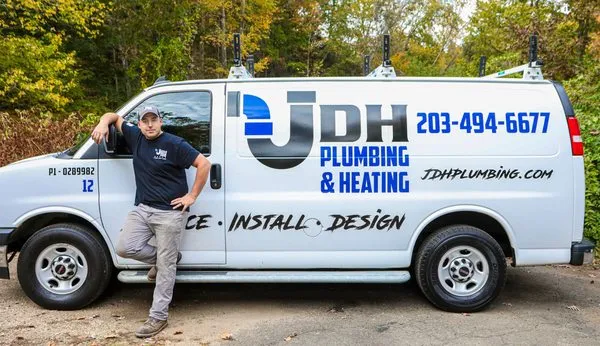
JDH Plumbing & Heating is a trusted, locally-owned and operated plumbing service based right in Orange, CT. We bring reliable expertise directly to your home or business, backed by our CT state plumbi...

For over 40 years, Frank Ballaro and his team of licensed, expert mechanics have been the trusted name for plumbing, heating, and remodeling in Stratford and across Fairfield and New Haven Counties. F...
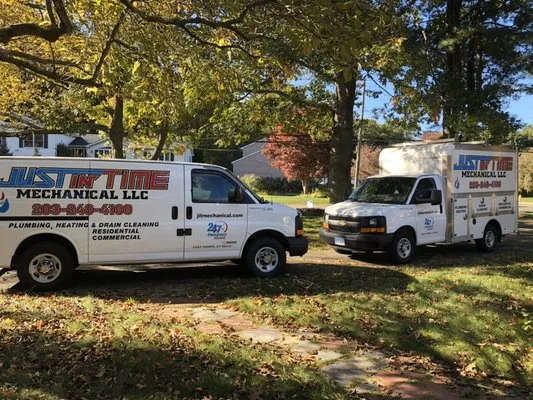
Just In Time Mechanical
Just In Time Mechanical is a trusted, locally-owned plumbing company serving East Haven and the surrounding communities. Founded in 2014 by Justin Golia and Vincent Affinito, the business is built on ...

JRL Plumbing & Heating is a trusted, locally-owned plumbing service in Woodbridge, CT. We specialize in a wide range of residential plumbing and gas line services, from routine repairs to full install...

Call The Bee
Call The Bee is your trusted, local HVAC and plumbing specialist in Farmington, CT. We are a licensed and insured team of factory-trained, EPA-certified technicians dedicated to keeping your home comf...
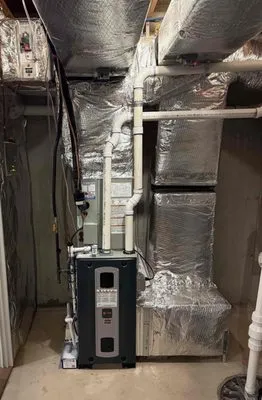
Total Mechanical Systems
Total Mechanical Systems has been Connecticut's trusted home services provider since 2002, based in Plainville and serving Hartford, New Britain, Bristol, Southington, West Hartford, and surrounding c...
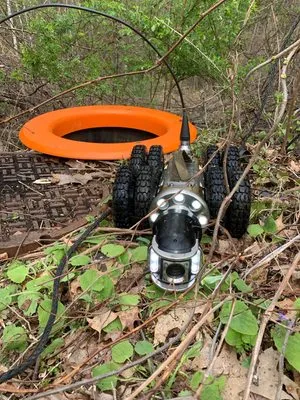
Since 1972, Savy & Sons has been the trusted, family-run choice for Amston's water management and infrastructure needs. As a third-generation business, we work alongside my brother, Ralph, to uphold t...
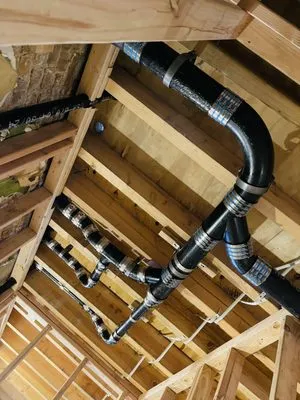
Founded in New York and now serving Jewett City, CT, Samuel Plumbing And Heating brings a straightforward, reliable approach to every job. We've built our business on the principle that no plumbing pr...
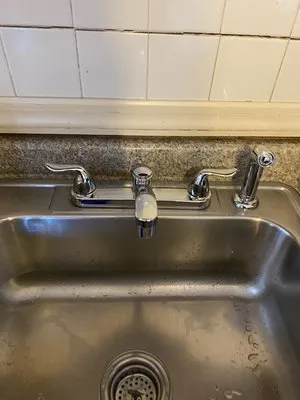
T Power House Building & Remodeling is an East Hartford home improvement company built on decades of collective trade experience. We offer a wide range of services, from appliance repair and furniture...
Estimated Plumbing Costs in Hampton, CT
Question Answers
What causes those tiny pinhole leaks in copper pipes?
In Hampton's 1974-era copper, pinhole leaks are typically caused by corrosion from acidic well water attacking the pipe from the inside. Over 50 years, this creates weak spots that eventually perforate. We also see failing solder joints at fittings from the constant thermal expansion and contraction of hot water lines. The leaks often start small, then rapidly worsen.
Why am I suddenly seeing blue-green stains on my bathroom fixtures in Hampton?
Your home's original copper pipes are now 52 years old. In Hampton Center, we're at the point where that protective interior lining has worn thin. Homeowners are finding pinhole leaks, often behind walls, and a noticeable drop in water pressure from decades of mineral scale buildup. It's a predictable lifespan issue for houses built around 1974.
Do I need a permit to replace my water heater in Hampton?
Yes, the Hampton Building Department requires a permit for water heater replacement. As a Connecticut licensed plumber, I pull that permit, schedule the inspection, and ensure the installation meets all current code, including proper seismic straps and pan requirements. Handling that red tape is part of the job—it protects your home's value and your insurance coverage.
My well water seems fine, but my water heater keeps failing early. Why?
Private well water here is often corrosive and low in pH. That acidity eats away at the anode rod in your water heater and the brass valves in your fixtures far faster than treated municipal water. Without a functioning anode rod, the tank's glass lining fails and it rusts out from the inside. We recommend testing your water's pH and installing a neutralizing filter if needed.
How long will it take for a plumber to get to my house in Hampton?
Heading past Hampton Congregational Church on US Route 6 is the main route for most calls. From there, it's navigating the back roads. A realistic dispatch for an urgent call is 45 to 60 minutes. We plan routes to minimize that time, but the rural layout means it's rarely a straight 15-minute trip.
What's the most important thing to do for my plumbing before spring in Hampton?
Disconnect and drain your garden hoses before the first hard freeze. A forgotten hose bib can freeze and crack the pipe inside the wall. Come spring thaw, when overnight lows can still hit 17°F, that crack will leak as things warm up. It's a simple, five-minute task that prevents a very common and costly repair in this temperate climate.
Are there special plumbing considerations for a rural house in Hampton?
The two main systems are your private well and septic. They require specific maintenance ignored in town. Well pumps and pressure tanks have a finite lifespan. Septic systems need regular pumping—every 3-5 years—and the leach field must be protected from runoff and root intrusion. A failure in either system is a full-household emergency, so proactive care is critical.
Could the hilly land around my house be causing my drainage problems?
Yes. The slope near Hampton Congregational Church is a good example. Hilly terrain puts constant, uneven stress on your main sewer line, which can lead to bellied or separated pipes. It also directs surface runoff toward foundations, which can overload perimeter drains. We often find that chronic slow drains or backups originate from a pipe joint that's failed due to this soil settlement and pressure.
